Mindi Reich-Shapiro’s Profile

Courses

ECE 211 Curriculum for Young Children – Fall 2026
This course is an introduction to the theories, methods and materials of curriculum planning in early childhood education (Preschool – Grade 2), with an emphasis on providing developmentally and culturally appropriate learning environments and experiences that encourage creativity in young children. The following topics are explored in depth: the intellectual and emotional importance of fostering creativity, the role of play in learning, the design of effective arts-based learning environments; the role of visual arts, music, movement and language arts/emergent literacy in developing children?s cognitive, social-emotional, physical, language and self-help skills. Course work includes workshops in planning and implementing creative arts experiences for young children.

ECE 211 Curriculum for Young Children – Spring 2026
This course is an introduction to the theories, methods and materials of curriculum planning in early childhood education (Preschool – Grade 2), with an emphasis on providing developmentally and culturally appropriate learning environments and experiences that encourage creativity in young children. The following topics are explored in depth: the intellectual and emotional importance of fostering creativity, the role of play in learning, the design of effective arts-based learning environments; the role of visual arts, music, movement and language arts/emergent literacy in developing children?s cognitive, social-emotional, physical, language and self-help skills. Course work includes workshops in planning and implementing creative arts experiences for young children.

ECE 211 Curriculum for Young Children – Spring 2025
This course is an introduction to the theories, methods and materials of curriculum planning in early childhood education (Preschool – Grade 2), with an emphasis on providing developmentally and culturally appropriate learning environments and experiences that encourage creativity in young children. The following topics are explored in depth: the intellectual and emotional importance of fostering creativity, the role of play in learning, the design of effective arts-based learning environments; the role of visual arts, music, movement and language arts/emergent literacy in developing children?s cognitive, social-emotional, physical, language and self-help skills. Course work includes workshops in planning and implementing creative arts experiences for young children.
ECE 311 Early Childhood Practicum I – Spring 2025
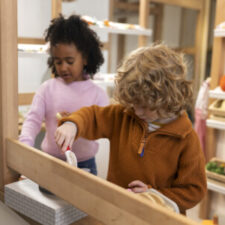
This fieldwork course focuses on observation and assessment of young children. It requires supervised participation in an assigned early childhood setting (preschool to second grade) and attendance at a weekly seminar. Students will learn how to use authentic assessment and observation strategies to (1) document young children’s development, growth, play, and learning, and (2) design curriculum that promotes children’s success. Recording strategies, rating systems, child studies/portfolios, and various assessment tools are explored. Students spend a minimum of 60 hours in the field.

ECE 211 Curriculum for Young Children – Fall 2024
This course is an introduction to the theories, methods and materials of curriculum planning in early childhood education (Preschool – Grade 2), with an emphasis on providing developmentally and culturally appropriate learning environments and experiences that encourage creativity in young children. The following topics are explored in depth: the intellectual and emotional importance of fostering creativity, the role of play in learning, the design of effective arts-based learning environments; the role of visual arts, music, movement and language arts/emergent literacy in developing children?s cognitive, social-emotional, physical, language and self-help skills. Course work includes workshops in planning and implementing creative arts experiences for young children.
Communities

This community is for all members of the Teacher Education Department — students, faculty, and staff from all programs (early childhood education, childhood education, bilingual education, and secondary education.

A collaborative space for BMCC faculty to connect around topics such as teaching and learning, scholarship, career development, and digital education.
This is the community for BMCC’s Teacher Ed Dept’s Computer Integrated Teacher Education (CITE) work

A place for BMCC faculty who are teaching (or considering teaching) on the OpenLab to connect and share ideas. Image by Wokandapix from Pixabay

BMCC | COIL: Collaborative Online International Learning
A space for faculty to learn about virtual global exchange
Projects

Why Men’s Participation Must Become a Structural Priority in U.S. ECEC Systems
This paper reframes male underrepresentation in ECEC not as a cultural inevitability but as a structural challenge requiring coordinated policy action.
Mentoring Men in 3K through 2nd Grade Settings Across Cultures and Contexts
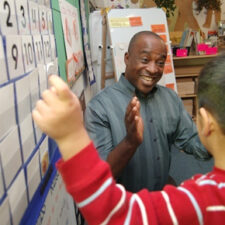
This international research collaborative aims to increase understanding, create strategies to mentor and support male educators, and expand existing efforts to foster gender-mixed teams in 3K through 2nd-grade settings across cultures and contexts. Self-identified male educators, working in 3K through 2nd grade, are invited to participate in the study by completing an online Survey.

Information on the BMCC Makerspace (opened to all faculty and students)

The website offers support and updates on assessment topics at the faculty level

A space for faculty to share ideas about how to support student learning during the transition to distance learning for the remainder of Spring 2020. Please request to join if you are faculty at BMCC. Click on “Visit Project Site” in the upper right to access BMCC’s Course Continuity Resources website.