Kailynn Cambi – Discussion Board 3.2

  1. What is a Repressive State Apparatus? Why does Althusser call it “repressive”? Can we explain his choice of words here. Give an example. 

A Repressive State Apparatus is a physical enforcement of the government. Such as; police, prison system, and military. Althusser calls it repressive because this group controls people by using physical force, violence, and punishment. Schools and media can try to persuade people into doing good and following rules peacefully while repressive systems choose to usw violence and hurt or put people aways for rebelling.

2. Let’s do the same for the Ideological State Apparatuses. What are they, how do they seem to work? 

ISA is a social institution. Like schools, churches, media, or family that try to teach us how to follow rules. The ISA is a softer system that use soft persuasion to shape how people should behave. They quietly train individuals to learn how to behave and see right from wrong so they accept current social order as completely natural and correct.AN sample;e can be the school system how how they teach from a young age how to follow schedules, respect authority, etc..

3. Important: this question will appear on our exam: How are the Repressive and Ideological State Apparatuses different from each other? What is the difference between the two?

While Repressive is a more violent system. As they abuse the power to control others by using violence on them, forcing those to follow and respect authority through physical violence and punishment if one does not agree with the system. ISA is a more calmer system that teachers through being softer when encountering g with those who disagree with the rights and wrongs. To teach from a early age what is acceptable in social society and how to not act out and just follow auhority respectfully.

4. polyp_cartoon_ideology_coincidence

This Ideology image shows how one’s belief can benefit one party belief but also affect badly another. Yes it would benefit the wealthy but what would that leave for the “poor”.

Annette O’Brien – DB 3.2

1: The Repressive State Apparatus, is one of the two mechanisms that Althusser believed to play a role in why people would subscribe to ideologies that don’t actually benefit them. Repressive State Apparatus uses the threat of punishment, to keep people in societal order, and to accept an ideology. The reason why it’s Repressive, is because it’s forcing an ideology, by creating a punishment for not adhering. Using “violence” to force allegiance (though, when regarding schools, “violence” takes the form of disciplinary punishments).

2: The Ideological State Apparatus, is the second mechanism that Althusser believed to create mass allegiance to ideologies that don’t benefit the common man. Ideological State Apparatus uses the idea of belonging, to keep people subservient to the ideology that surrounds them.

3: The difference between the two apparatus’, is how they create adherence. Repressive State Apparatus uses fear of punishment to lessen the desire to rebel. Because there’s obvious consequences for not doing what you’re “supposed to do”. But, Repressive State Apparatus, isn’t the opposite of Ideological State Apparatus. Rather, it’s a counter measure for if it fails, or if people try to move around it. More times then not, Ideological State Apparatus is the tool that keeps most people, in line. It’s what makes people subservient and blind. And in some cases, it distracts people from the change they could make, because belonging to a certain group, means more. Ideological doesn’t force your hand, it makes blindly following look better, and from there, you make the choice yourself.

4. Call me, old-school. But when I heard that we needed to find an example of an apparatus, the first thing my mind went to was Star Wars. In the clip I chose, the emperor of the evil empire forces Luke Skywalker to join the Dark Side. But when he refuses that order, he’s punished with death. Even though his father saves him, in the end. The fact is, there was punishment for non-adherence. Which in my opinion, makes this an example of Repressive State Apparatus.

Link: https://youtu.be/PqaiKmm8gsY?is=jCKZ413aF1EL_g7p

Repressive State Apparatus

A Repressive State Apparatus (RSA), in Althusser’s framework, is the part of the state that maintains order and enforces the existing social system primarily through force, coercion, and the threat of punishment. It includes institutions like the government administration, the police, the military, the courts, and prisons. Althusser calls it “repressive” because its main way of functioning is to repress (to suppress, control, or punish) behavior that challenges or breaks the rules of the dominant order.

An example would be a government using the police and army to break up a large protest against economic inequality. Even if many protesters believe the system is unjust, the RSA steps in to physically disperse the crowd, arrest organizers, and possibly charge them with crimes. This shows repression in action: the state is not mainly trying to persuade the protesters in that moment, it is using force and the threat of punishment to stop opposition and protect the existing order.

Ideological State Apparatus

Ideological State Apparatuses (ISAs), for Althusser, are the institutions and social structures that reproduce the social order mainly through ideology rather than through direct force. Examples include schools, the family, religion, the media, culture, sports, politics, and even parts of the legal and trade-union systems. Unlike Repressive State Apparatuses, which rely on police, courts, and the army, ISAs work by shaping how people think, what they see as normal, and what kinds of lives and roles feel natural or desirable.

How Are They Different?

The main difference between Repressive State Apparatuses (RSAs) and Ideological State Apparatuses (ISAs) is how they maintain the existing social order: RSAs rely primarily on force and the threat of punishment, while ISAs rely primarily on ideas, beliefs, and socialization.

Image

This crucifix shows the ideology of Christianity emphasizing atonement and incarnation. It reminds believers that God became fully human to willingly endure physical pain, bearing the weight of human sin. In Western Catholic traditions, this serves as a powerful visual reminder of the sacrifice required for salvation.

Jiahui Lin-State Apparatus

1.What is RSA?

Repressive State Apparatus(RSA)are those institutions that control people through the threat of force or violence, like police, courts, and prisons. Althusser calls it “repressive” because those institutions use military force to control people. If you don’t obey the rule, they can use violence to force you. “Repressive” exactly describes how RSA works. For example, in the courts, if the judge found you guilty, you need to be punished. They can use their right without your recognition.

2. What is ISA?

Ideological State Apparatuses(ISA) are those institutions that control people through social norms, acceptance, and institutions, like schools, political systems, media, and sports. They don’t force you, but they make you obey the rules voluntarily. For example, when we are scrolling TikTok or Instagram, the algorithm keeps sending similar content, and gradually you feel like everybody thinks like that. You start forming new values, but you don’t realize that you are shaping by it.

3. RSA vs ISA

The difference between them is why people obey and how they work. Repressive State Apparatuses work through force or violence. People obey them because they are afraid of the consequences. Ideological State Apparatuses work through ideas, culture, and values. People obey them because they think it is the right thing to do.

4.EXAMPLE OF ISA

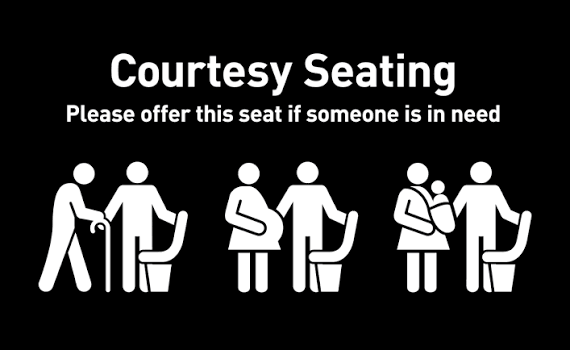
ISA This sign makes you obey the rule voluntarily through the moral duty without any violence. The education makes you feel don’t give up the seat is incorrect.

Yectlanesi Irigoyen Cadena- Repressive and Ideological Apparatus

  1. I understand a Repressive State Apparatus as control through force, punishment, or fear.It can include the police, courts, and prisons. Louis Althusser called it “repressive” because these institutions can use punishment, force, or the fear of consequences to make people follow the rules. For example, even when you are a child, you may be taught that if you do something wrong, the police could take you to jail and you could lose your freedom. This can create fear and encourage you to follow the rules.
  2. I understand an Ideological State Apparatus as another way of controlling people, but instead of using force or punishment, it influences what people believe and think.Meaning it steps in when a repressive apparatus fails. It can make people feel like they have a choice when their choices are already influenced by the ideas they have been taught. For example, schools can teach students certain values, beliefs, and ideas about how society should work. Because people may believe that these ideas are their own choices, they are more likely to follow the rules without needing to be forced. For this reason having the feeling or illusion of a choice that you think you have,can keep people satisfied and reduce the desire to challenge or change the system.
  3. I think this is an example of an Ideological State Apparatus because the image promotes the idea that everyone in America is free, equal, and has the same opportunities.The image influences people through ideas and beliefs instead of using force or punishment.

Aaliyah Gravesande – Discussion Board 3.2

  1. A Repressive State Apparatus is a part of the government that maintains order through force or the threat of punishment. Althusser calls it repressive because it can control people through laws or punishment. 
  1. Ideological State Apparatuses are institutions that influence the way people think and what they believe is normal. Examples include schools, religion, family, and the media. 
  1. The difference between the two is Repressive State Apparatuses control people mainly through force and punishment and Ideological State Apparatuses influence people through ideas and beliefs.
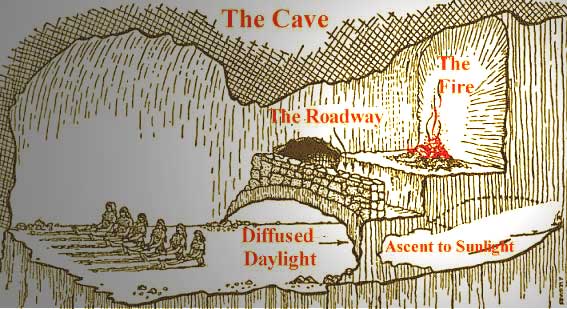
  1. Platos allegory of the cave is example of an ideological apparatus. It shows how what people are exposed to can shape what they believe to be reality.

Quinton Rich- Repressive and ideology how are they different

1. What is a Repressive State Apparatus? Why does Althusser call it “repressive”? Give an example.

A Repressive State Apparatus is parts of the government that keeps order by using force, punishment, or the threat of punishment. Althusser calls it “repressive” because these institutions can force people to follow laws and rules even if they dont agree with them. Some examples are the police, courts, prisons, and the military. For example, if someone breaks the law, the police can arrest them and the court can sentence them to jail. This shows how the state can use force and punishment to control certain behavior.

2. What are Ideological State Apparatuses? How do they work?

Ideological State Apparatuses are institutions that influence how people think and what they believe instead of mainly using force. Some examples are schools, churches, families, the media, and even entertainment. They work by teaching people certain values, beliefs, and ideas about what is considered normal or acceptable in society. For example, schools dont just teach math and English, they also teach students things like following rules, being on time, and respecting authority.

3. How are Repressive and Ideological State Apparatuses different from each other?

The biggest difference is how they control or influence people. Repressive State Apparatuses mainly work through force, laws, and punishment, while Ideological State Apparatuses mainly work through ideas and beliefs. For example, the police can physically arrest someone for breaking the law, which would be repressive. A school or the media can influence how someone thinks about laws and society, which would be ideological. Both can help maintain order, but they do it in different ways.

4. Post an example of ideology and say whether it is repressive or ideological.

One example of ideology could be a military recruitment commercial. The commercial may show joining the military as honorable, brave, and a way to serve your country. I would consider this an example of an Ideological State Apparatus because the commercial is not forcing anyone to join. Instead, it is using images, messages, and certain values to influence how people think about military service. It can make people connect joining the military with things like pride, success, and patriotism.

Rhandol De La Cruz – State Apparatus

A repressive State Apparatus is part of the government that keeps order mainly through rules, Authority, laws, or force. Althusser calls it “repressive” because it can force people to follow rules instead of simply convincing them.

A good example would be the prison system. If someone breaks the law, the state can take away that persons freedom and place them in jail, this forces people to do good even though they may want to do things that breaks the rules.

An Ideological State Apparatus works in a different way. Instead of controlling people through punishment, it affects the way people learn values beliefs and expectations about life. Things like family, religion, TV and social media can all affect how someone sees the world, For example, social media can make people believe that popularity, money, or appearance are signs of being succesful.

To me, the main difference is that one uses direct power, while the other works more through ideas.

If a police officer arrest someone, that is direct power being used. But if a person grows up hearing certain messages from family, TV and social media, those messages can influence the way they think without anyone physically forcing them.

For my example, I would use an advertisement showing a person with an expensive car, designer clothes, and a large house. The advertisement sends the message that having expensive things means you have made it in life. I would call this an Ideological State because advertising influences how people define success without forcing them to believe it and even if they have different views that oppose each other. One person can think just being happy means you are successful while the other can think materialistic things is what makes success.

Justin LeGendre – Discussion Board 3.2

  1. A repressive state apparatus is part of the state that maintains social order through force or the threat of violence. I understand Althusser’s use of the word “repressive” as a way to distinguish this type of control from ideological institutions, like schools or religion, which primarily shape people’s beliefs and values. With a repressive state apparatus, you’re forced to comply regardless of whether you personally agree or not because these institutions have the power to enforce laws and punish those who violate them. Examples include the police, military, courts, and prison system. Repression can sometimes involve physical force, but even when it doesn’t, the possibility of consequences such as fines, arrest, or imprisonment can influence how people behave.
  2. Ideological state apparatuses are institutions in everyday life that help shape people’s beliefs, values, behaviors, and understanding of their place here in society. Examples include schools, families, churches, politics, and mass media. Unlike the repressive state apparatus, they mainly work through ideology rather than force or the threat of punishment. They teach us certain values and expectations that can eventually feel normal in society or like our own personal choices, while also helping maintain the existing order of society. Ideological institutions can influence how we behave and see the world without physically forcing us to comply.
  3. Repressive and ideological state apparatuses are different mainly in how they influence people and maintain social order. A repressive state apparatus mainly works through force, punishment, or the threat of consequences, while an ideological state apparatus works mainly by shaping our beliefs and what we consider normal or acceptable. With repressive institutions like the police, courts, or prisons, you may comply because you know there can be direct consequences if you don’t. Ideological institutions like schools, religion, and the media are more present in our everyday lives and condition us to follow certain expectations because we have learned to view them as normal or appropriate. The main difference is that one primarily maintains order through repression, while the other primarily maintains it through ideology.
  4. I chose this image from the 2020 BLM/George Floyd protests in New York City because I think it clearly demonstrates Althusser’s idea of a repressive state apparatus. This image shows NYPD officers using pepper spray toward protesters, demonstrating how police have the authority to use physical force to enforce social order. This is especially relevant because later investigations into the NYPD’s response to the protest found cases of unjustified, excessive force and concluded that some police tactics escalated tensions. To me, this image represents Althusser’s idea of repression because, instead of shaping people’s beliefs or values, as an ideological state apparatus would, the police can directly control behavior through force or the violent threat of consequences.

Discussion 3.2 – Luna Liang

1.Repressive State Apparatus


A Repressive State Apparatus includes things like the police, courts, and prisons. Althusser calls it “repressive” because it works through force, not persuasion. If you break the law, these institutions can physically stop you, arrest you, or lock you up. There’s no room for negotiation here. That word choice makes sense because these institutions don’t try to convince you of anything, they just enforce compliance directly.

A good example is a cop arresting someone on the street. The state is literally using force to control behavior, not trying to change how the person thinks.

2.Ideological State Apparatuses and How They Work


Ideological State Apparatuses are institutions like schools, media, and churches. Unlike the police, they don’t need force to make people follow the rules. Instead, they shape how people think. And honestly, that’s more powerful in a way, because people end up believing the rules are just “normal,“ instead of feeling forced into anything.

Take schools as an example. There’s no police officer standing in the classroom. But kids still learn to sit quietly, raise their hands, and follow a strict schedule from a really young age. By the time they grow up, most of them don’t even question why a workday should follow that same rigid pattern.

3.The Difference Between the Two


The core difference between these two systems lies in how each one secures control over the population.

  • External Force: Repressive State Apparatuses intervene from the outside, after a rule has already been broken. The police, the courts, and the prison system all operate this way, stepping in only once a violation has occurred.

  • Internal Belief: Ideological State Apparatuses operate before that point. They shape a person’s beliefs and values so thoroughly that obedience becomes voluntary rather than imposed.

  • Core Distinction: In essence, repressive power punishes disobedience after the fact, while ideological power works to prevent the desire to disobey from forming in the first place.

4.My Example of Ideology


The image I’m posting shows a row of motivational posters, EXECUTE, SUCCESS, HUSTLE, each one styled like a dictionary entry, hanging above an office worker’s desk.

This is an example of an Ideological State Apparatus at work, not a repressive one. Nobody is forcing the employee at that desk to work overtime or push through stacks of paperwork. There’s no cop standing behind him. Instead, the posters are quietly telling him that hustling and overworking are personal virtues, almost like moral values he should live by.

The poster makes overwork look like a personal choice, something admirable you do for yourself. It hides the fact that these expectations often come from the company wanting more labor for less pay. And because the message feels so normal, even inspirational, workers end up pushing themselves without anyone needing to say a word.