JIAHUI LIN-DB 6.1

1.The class that wrote the Constitution: Ruling class/ Capitalist class/ Economic elite (the propertied) class. Including wealthy landowners, slaveholding planters, merchants, bankers, and holders of public securities. They owned most of the wealth and means of production, so they had the ability to restrict qualification for voting. Therefore, voting rights were tied to strict property qualification. Consequently, they could use the Constitution to publish more laws that were beneficial to themselves.  According to Parenti, Article I, Section 8 of the Constitution grants Congress the power to repay public debt, and it directly benefits speculators in that debt. Also, Beard pointed out that southern slaveholders supported a strong federal government merely in order to use federal troops to protect their own property and suppress slave revolts.

The class that was excluded: Working class who didn’t have huge properties, including small inland farmers, artisans, indentured servants, propertyless White males, enslaved Africans, and women. They might have a heavy debt under high tax and exorbitant interest rates. They didn’t have any right at law, and unprecedented at the Constitution Convention. Small scale farmers faced high debt, foreclosures, and prison, leading to the armed revolts like Shays’ Rebellion. This indicated the sharp conflict between indebted working class and ruling class. 

2.In my opinion, the social class structure of the early United States and today’s society are different and same in some ways. Difference: slavery is no longer legal, and the voting right doesn’t depend on personal property-most citizens have rights to vote. Same: the social properties and means of production are still controlled by the ruling class(capitalists), and the capitalists can use their right to lead policy formulation.

3.From my perspective, the framers were afraid of democracy because they were worried that democracy might threaten their wealth and status. The rich elites are the minority of the society, while the working class are the majority of the society. The framers are afraid that when people get more rights, they will make new policies which will be beneficial to the working class. That’s why they set up things like indirect elections and checks and balances, in order to keep power in their hands.  
JIAHUI LIN-DB 6.2

1.Factions remind me of the concept of social class. The capitalist and working class are divided by different interests. They harm the rights of others in pursuit of their own specific interests, and unite based on the same interests.

2.According to James Madison, the source of wealth is from different and unequal faculties of acquiring property. Faculties means people’s talents, skills, and abilities. Because individuals have unequal faculties, they have different degrees and kinds of property. Those with higher abilities accumulate wealth, but those who lack these faculties remain poor.

3.I don’t totally agree with this opinion because it’s too narrow to explain the reason. In society, so many issues like family background, different social class, different opportunities all can affect wealth and poverty, not just individual faculties. Even if the person may have specific ability, he may lack opportunities and remain poor.

4.The first object of the US government is protecting the unequal faculties of acquiring property, which deepen the social class division. Yes, this core mission really impressed me, because today’s government aims to protect equal rights, promote democracy, and increase public services. These two missions are totally different, and indicate that the working class make a huge progress on fighting for their equal rights.

5.No, I am not surprised at all, because according to the reading materials, the framers dislike democracy, they considered it as the worst of all public evils, and thought the country’s problems were caused by the turbulence and follies of democracy. James Madison was afraid of pure democracy because he was terrified of tyranny of the majority. From social class, the capitalists just were a few part of the population, and the working/indebted class were the majority. The majority could cancel debts, lower tax, or divide the properties equally through pure democracy. However, it definitely threatens the wealth and power of the ruling class, and affects the social class structure a lot. Therefore, Republican(representative) was a way to protect the power and properties of capitalists by indirect election, and stop the majority from taking over. 

Jiahui Lin-DB 5.1

1.In my opinion, the means of production are the stuff that people used to produce products, like machines and original materials. Labor is the effort that workers make to produce goods. For example, in a restaurant, the cook tools and ingredients are the means of production, and the work that the chef makes the food is labor.


2.I understand value as something that is created through human labor. The labor and time gives value to the products. For instance, the value of a piece of wood is different from a table, because someone puts effort into it turning wood to a table.

3.Labor and value are related because values are created by labor. Like I mentioned above, the effort that the workers take gives value to the product. When people spend time with the product, their labor increases the value of the good.


4.I think labor is the exact effort people make, like spending time and energy. Labor power is the ability of someone to work. Workers sell their labor power to employers to earn a salary. For example, working 8 hours in the hospital is labor, and the knowledge and skills the person has is his/her labor power. 


5.Surplus value is the part that workers create more value than they receive in wages, and it’s the main profit of capitalists. It’s important to know because it’s the core reason for class conflict. Capitalists own the means of production, and workers have to sell their labor power to help capitalists to gain more profits. For example, the chef has $150/day, and he already cooked $150 worth of meals, the rest of the meals he makes is the surplus value that belongs to the boss. 

Jiahui Lin DB 5.2

Unlike small-scale commodity production (C–M–C), where people sell commodities in order to buy what they need for daily consumption, capitalist production (M–C–M’) buys things in order to sell them for a profit. In C-M–C, people cannot get many profits because the money they earn has to be spent on maintaining lives. However, capitalists use their initial money(M) to buy the means of production(factories, machines, and materials) and labor power of the working class to run their business. 

During a typical 8 hour workday, a worker’s shift is divided to two parts:

Necessary labor time: For example, in the first 4 hours, the worker creates value equal to their daily wage($150), which covers their basic living subsistence.

Surplus labor time: In the remaining 4 hours, the worker continues to produce products without receiving extra pay. 

During this process, workers’ labor creates tremendous value, but they barely get paid by a small part of it. Capitalists buy their labor power based on the wages covering workers’ daily subsistence; the rest value, which is surplus value(m), is the main reason that capitalists can increase their wealth. The result in M’=M+m, where M’ is the total expanded money the capitalist receives. After this cycle, capitalists can use these profits to enter the next cycle and keep increasing their wealth.

Jiahui Lin DB 5.3

The statistic on page 29 that impressed me the most is that the top 1% of the population owns more wealth than the bottom 90% combined. This data really shocked me because it shows exactly how huge the wealth gap between different classes in the United States. The American dream is an idea that many people believe in and so many immigrants come to America to achieve it. The basic idea of the American dream is that everyone can be rich by working hard. However, this idea is not working anymore. The statistic proves that wealth is controlled by a tiny proportion. For normal working class people, no matter how they work, it is so difficult to catch up with the rich class because the top 1% controls most of the land, stocks, and business that are inherited between their family.

Living in a society that exits a huge wealth gap between different classes creates many serious problems. As we learned before, the wealthy capitalists have much money and political power. They can use their money to influence government policies or effect elections to make the final decisions that are beneficial to themselves. On the other hand, normal workers barely have a little power and must face rising costs with low salaries. The huge wealth inequality affects people’s basic needs–higher education, healthcare, and housing are very hard for poor people and the working class to afford. I can see this implication playing out every day in education and job opportunities, especially with unpaid internships. For example, in today’s society, many companies prefer hiring college graduates who already have internship experience. Capitalists can support their children to do whatever they want because they don’t need to worry about money. However, working class-children can’t work for free, and they have to do part-time jobs to pay tuition and basic living costs. If they choose unpaid internships, their parents will have more stress. As a result, working-class students don’t have a chance for unpaid internships, which makes it much harder to get high-paying corporate jobs after graduation. This example shows how wealth inequality creates unfair competition from the very beginning. 

Jiahui Lin-4.1 DB

2.The subway station closest to where I live is 8th Avenue in Brooklyn(N train). According to the concept from Reading 4.1, the working class tends to live in my neighborhood. I am not surprised by the answer since this neighborhood is a well-known working-class community. A lot of immigrants live here, and most people living here work long hours in restaurants, grocery stores, delivery services, construction, or small family-owned businesses. Therefore, I think it is an accurate representation. It’s clear that most people who live around here rely on physical labor to make a living, with the income belonging to the working class.

Jiahui Lin-DB 4.2

  1. Distinction between owners and employees?

Owners belong to the owning class, which have the wealth of society. They make money by investments, such as stocks, bonds, real estate, and financial assets. They can still earn money even while sleeping. However, employees belong to the working class, which must work for a living. They must sell their physical or mental labor for salaries. For example, a real estate investor who owns a lot of apartments is the owning class because she can earn money by collecting rent from tenants. In contrast, the real estate agent is the working class because he must actively facilitate property deals to earn a commission.

  1. The quote by Adam Smith on pg. 28

Adam Smith considers labor as the real value of all commodities. Money is merely a symbol and medium used for transactions. The item itself doesn’t have that much value, but the labor increases it. For instance, Parenti points out that raw materials can’t generate profit by itself. Workers need to chop trees, operate machines, and transport goods to make raw materials as valuable commodities. The labor from workers during this process gives the real value of the product.

  1. Class is NOT an identity

In my opinion, class is not a simple identity label because other identities tend to culture recognition, but class is related to the conflict of economy. For race, gender or other identities, people can through respecting each other and eliminating prejudge to live together peacefully. It has nothing to do with the economy. However, for social class, economic conflict always exists. The bosses want to use the minimum wage to make the biggest profit, while workers want less labor with high salaries. This is the direct conflict over money, being polite or respectful can’t resolve the problem over the social class. Therefore, class is a real economic conflict, not just an identity label.

  1. Class structures are built around a close form of dependency

From my perspective, the close form of dependency means workers and capitalists are structurally bound together. Being a worker structurally requires dependency on an employer for a job, they need bosses to pay their salaries for living. While being a capitalist requires exploitation of workers to remain capital. Without the labor of the workers, the capitalist cannot generate more profit and remain capital value. For instance, a fast food worker depends on the salary to survive, and the owner depends on the labor of the worker to keep running their restaurant. Therefore, this structural dependency forces workers to stay in the system to survive, leaving them in a vulnerable position compared to capitalists.

Jiahui Lin-What Is Ideology?

1.What is ideology?

In my opinion, ideology is not an exact theory, it is merely a tool for people to make different decisions that they consider as right and beneficial. We rely on a compass-ideology that doesn’t show us the whole landscape, but it gives us a direction. Without it, we would have to analyze every single issue from growing up, which is impossible. With it, we can quickly sort information into categories like “fair” or “unfair”, “smart” or “risky”, “moral” or “immoral.”

The reading shows how it works in real life. Conservatives and liberals have different answers for the same question, which is because they use different tools. For instance, the article points out that conservatives want to reduce spending on social programs like minimum wage and food stamps, but they strongly support increasing subsidies for large enterprises. The reason for that is not simply anti-government, it is their ideology-the tool tells them which direction is correct. 

Althusser’s video shows another aspect with ideology-he argues that we gain the ideology through daily life and institutions. His concept of “interpellation” means we are hailed by ideology, and when we respond, we become a certain kind of person without realizing it. We learn the ideology through family, social media or surroundings. We don’t choose our tools from a shelf-we pick them up from the environments we grow up in.

2.The difference between conservative and liberal

From my perspective, the big difference between conservative and liberal ideology is individual responsibility vs social responsibility, and freedom vs fairness. 

Conservatives emphasize individual responsibility. They consider your own behavior to shape your own life, so people should take their own responsibility. They also value freedom, which is free from government interference.

Liberals emphasize social responsibility. They think people start from different steps, so society has a responsibility to help them. They value fairness, not just equal opportunity, it’s making sure the outcome isn’t totally unfair.

For example, the student loans and college tuition. A conservative might say”College is a personal choice, they should pay for it by themselves. I don’t want to pay your fee with my taxes” A liberal might say “Education is beneficial to everyone, so the government should invest more in college.” Same question, but different tools.

So the dividing line is where you think the problem is and what solution you think about. Conservative blame individuals, look to the market and personal effort. Liberals blame systems, look to government and group actions.

3.Althusser’s definition of ideology

Althusser thinks the ideology is we take the things around us for granted and never stop to wonder why. We don’t think about it because we live in it during our whole lives.

For example, going to a good college and getting a good job is my own goal. However, is it the goal I actually want? I’ve been told these since I was a kid-by my parents, my teachers, and everything around me. I never think about whether I really want this? What are the other options? I never question it, and it’s exactly the ideology that is working. It made a social expectation feel like my own choice.

Jiahui Lin-State Apparatus

1.What is RSA?

Repressive State Apparatus(RSA)are those institutions that control people through the threat of force or violence, like police, courts, and prisons. Althusser calls it “repressive” because those institutions use military force to control people. If you don’t obey the rule, they can use violence to force you. “Repressive” exactly describes how RSA works. For example, in the courts, if the judge found you guilty, you need to be punished. They can use their right without your recognition.

2. What is ISA?

Ideological State Apparatuses(ISA) are those institutions that control people through social norms, acceptance, and institutions, like schools, political systems, media, and sports. They don’t force you, but they make you obey the rules voluntarily. For example, when we are scrolling TikTok or Instagram, the algorithm keeps sending similar content, and gradually you feel like everybody thinks like that. You start forming new values, but you don’t realize that you are shaping by it.

3. RSA vs ISA

The difference between them is why people obey and how they work. Repressive State Apparatuses work through force or violence. People obey them because they are afraid of the consequences. Ideological State Apparatuses work through ideas, culture, and values. People obey them because they think it is the right thing to do.

4.EXAMPLE OF ISA

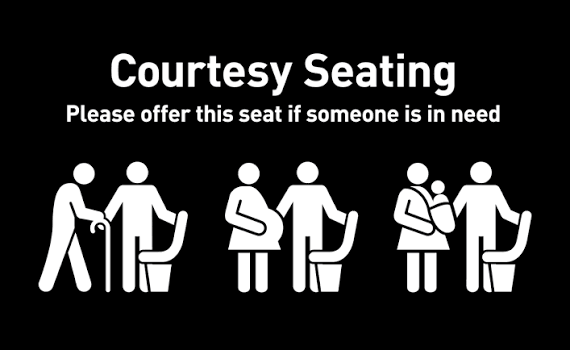
ISA This sign makes you obey the rule voluntarily through the moral duty without any violence. The education makes you feel don’t give up the seat is incorrect.