A Repressive State Apparatus (RSA), in Althusser’s framework, is the part of the state that maintains order and enforces the existing social system primarily through force, coercion, and the threat of punishment. It includes institutions like the government administration, the police, the military, the courts, and prisons. Althusser calls it “repressive” because its main way of functioning is to repress (to suppress, control, or punish) behavior that challenges or breaks the rules of the dominant order.
An example would be a government using the police and army to break up a large protest against economic inequality. Even if many protesters believe the system is unjust, the RSA steps in to physically disperse the crowd, arrest organizers, and possibly charge them with crimes. This shows repression in action: the state is not mainly trying to persuade the protesters in that moment, it is using force and the threat of punishment to stop opposition and protect the existing order.
Ideological State Apparatus
Ideological State Apparatuses (ISAs), for Althusser, are the institutions and social structures that reproduce the social order mainly through ideology rather than through direct force. Examples include schools, the family, religion, the media, culture, sports, politics, and even parts of the legal and trade-union systems. Unlike Repressive State Apparatuses, which rely on police, courts, and the army, ISAs work by shaping how people think, what they see as normal, and what kinds of lives and roles feel natural or desirable.
How Are They Different?
The main difference between Repressive State Apparatuses (RSAs) and Ideological State Apparatuses (ISAs) is how they maintain the existing social order: RSAs rely primarily on force and the threat of punishment, while ISAs rely primarily on ideas, beliefs, and socialization.
Image
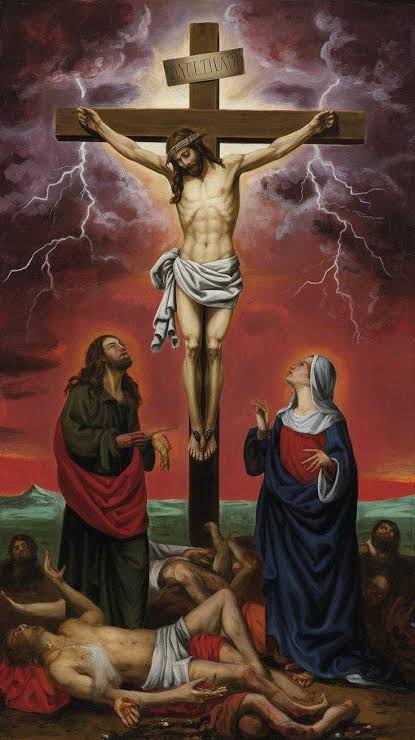
This crucifix shows the ideology of Christianity emphasizing atonement and incarnation. It reminds believers that God became fully human to willingly endure physical pain, bearing the weight of human sin. In Western Catholic traditions, this serves as a powerful visual reminder of the sacrifice required for salvation.