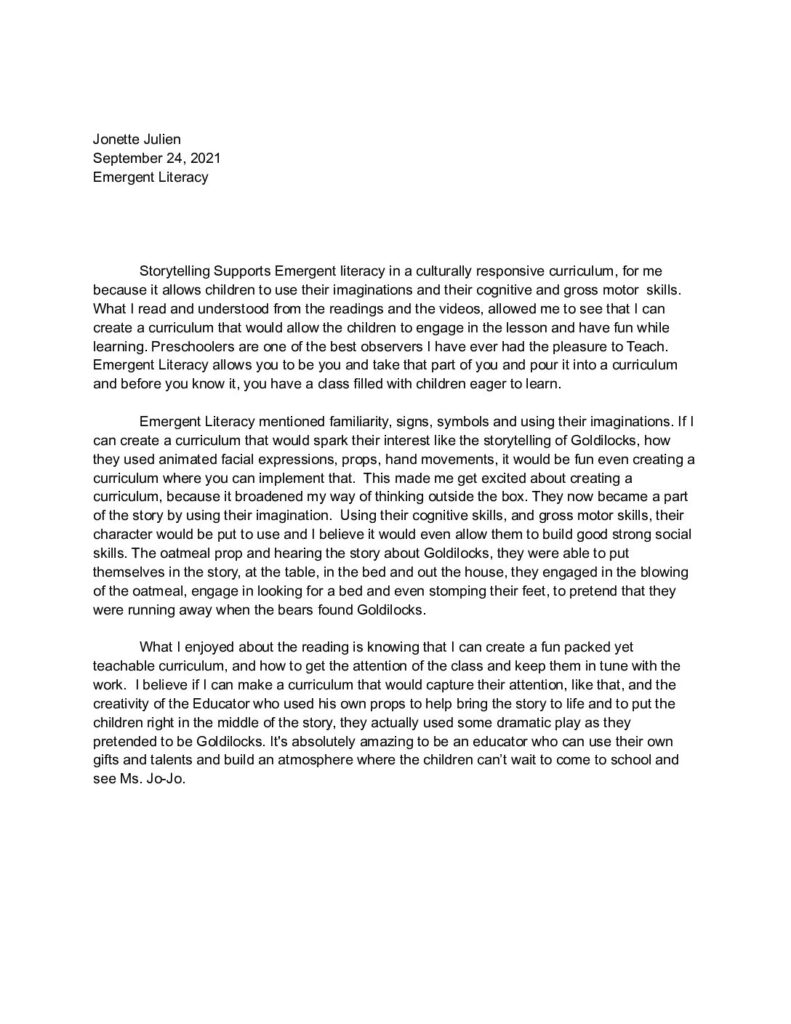
1.How does oral storytelling support emergent literacy in a culturally responsive curriculum? Be specific. Explain how storytelling supports (a) understanding of words, (b) symbolic representation, and (c) pretend play.
- Oral storytelling supports emergent literacy in a culturally responsive curriculum because educator you are able to use both together. Which mean you can have a book that explains a lot of different things that goes with your curriculum. For example, if your curriculum is about different black history month, and you find a book about the history of black history month.
2.Describe two strategies you would use to incorporate oral storytelling into your classroom.
- Two strategies I would use to incorporate oral story telling into my classroom would be first, I would give short breaks during lessons where students can tell each other stories in groups as I listen. Secondly, I would lead by example by telling them my stories too and dedicating some lessons to pure storytelling.
3.Describe two components of an effective language arts program and explain how you would incorporate these strategies into your classroom.
- The two components in the affected langue arts program I would use read-aloud that are a part of our lessons and activities. Also, use diverse reading so every child that comes into my classroom will always feel safe and welcomed. Also, help everyone share a part of their culture.