

Biological Theories
8 posts

Podcast from The Criminology Academy Episode 113. Traumatic Brain Injuries, Mental Health, and Behavior with Joseph Schwartz Published January 6, 2025 It’s episode 113! In this episode, we speak with Professor Joseph Schwartz about his work on biosocial criminology. Joseph A. Schwartz is an associate professor in the College of Criminology and Criminal […]
This Last Week Tonight episode with John Oliver is a valuable resource for connecting modern surveillance technologies to historical biological perspectives in criminology. It highlights how facial recognition technology (FRT) can reflect the same flawed logic as pseudoscientific practices like physiognomy—the 19th-century belief that criminal traits could be identified through […]

Promising Future, Complex Past: Artificial Intelligence and the Legacy of Physiognomy. (n.d.). [Exhibitions]. U.S. National Library of Medicine. Retrieved July 22, 2025, from https://www.nlm.nih.gov/exhibition/artificial-intelligence-and-physiognomy/index.html
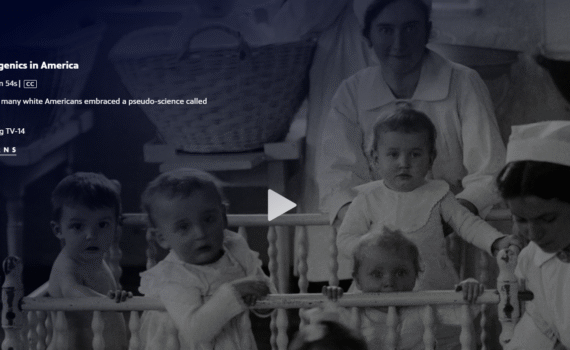
This excerpt from The U.S. and the Holocaust, a three-part documentary directed by Ken Burns, Lynn Novick, and Sarah Botstein, offers valuable context for criminology students examining biological theories of crime and their real-world consequences. The video explores how pseudo-scientific ideas about genetics, race, and criminality fueled American eugenics policies […]
This video traces the beginnings of biological explanations of criminal behavior—starting with early 19th‑century theories that labeled certain individuals as “born criminals” based on physical features—and highlights how evolutionary ideas and eugenics fueled forced sterilization and racial hygiene policies. For a class on biological perspectives, it provides valuable historical context: […]
Rocque, M., Welsh, B. C., & Raine, A. (2012). Biosocial criminology and modern crime prevention. Journal of Criminal Justice, 40(4), 306–312. https://doi.org/10.1016/j.jcrimjus.2012.05.003
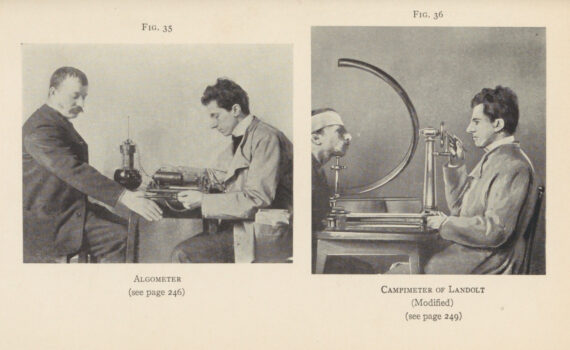
Kepner, P. (2018). Chapter 3: Laughing at Lombroso: Positivism and Criminal Anthropology in Historical Perspective. In Triplett, R.A. (Ed.). The Handbook of the History and Philosophy of criminology. John Wiley & Sons, Incorporated. BMCC students and faculty have free access to this ebook with their CUNYfirst login credentials at ebookcentral.proquest.com/lib/bmcc/detail.action?docID=5144712
