


The Crash Course video “Karl Marx & Conflict Theory” can be used to introduce students to the foundations of critical criminology by highlighting how Marx’s ideas about historical materialism, class struggle, and power help explain the role of law and punishment in maintaining capitalist dominance. The video sets the stage […]
Videos
29 posts

This YouTube video, which details the case of Devin Gray, a Black woman who shot her abusive boyfriend in self-defense, is highly relevant for a Criminology module on feminist criminology. It directly illustrates how self-defense laws, particularly “stand your ground” laws, are often not applied equally to women, especially women […]
This video is featuring a discussion on the rise of female criminality with Dr. Freda Adler. In this video, Dr. Adler addresses key tenets of her theory by exploring the increasing rates and changing nature of crimes committed by women, moving beyond traditional “feminine crimes” to offenses previously considered “masculine.” […]
Use this video to help students understand how criminal behavior is learned through social interaction, emphasizing the role of peer influence and the development of pro-criminal attitudes as explained in differential association theory. Students can be asked: How might someone’s environment or social circle influence them to engage in criminal […]
By showing this interview with “Crime + Punishment” director Stephen Maing and Lt. Edwin Raymond on Democracy Now, we can spark discussion on how social learning theory operates within institutions like the NYPD. We can encourage students to identify how officers learn behaviors through peer association, reinforcement from superiors, and […]

In this video, Dr. Angela Duckworth discusses the development of self-control in adolescents, the impact of peer influence, and the role parents play in fostering regulation and decision-making. This talk is an excellent resource for teaching social control theory, particularly Hirschi’s focus on internal controls and the role of socializing […]

Victor Rios’s TED Talk offers a compelling illustration of Hirschi’s social bonds theory, which posits that strong ties to family, school, and community help prevent delinquency. In the talk, Rios shares his journey from gang involvement and incarceration to becoming a scholar and educator, highlighting how caring adults and supportive […]

This video, Targeting Retaliation, by visual journalist Michael Karas of NorthJersey.com and The Record, offers a powerful real-world case study for teaching social disorganization theory. The documentary follows the Paterson Healing Collective, an anti-violence organization working to reduce retaliatory shootings in Paterson, NJ. Paterson is a city marked by economic […]
This video features Dr. Robert Agnew explaining General Strain Theory, extending earlier anomie frameworks by Durkheim and Merton. It breaks down the types of strain individuals face—such as goal blockage, removal of positive stimuli, and presentation of negative stimuli—and connects them to negative emotions and potential deviant behavior. Hearing from […]
This PHILO-notes video, What Is Anomie?, offers a clear and concise explanation of Émile Durkheim’s concept of anomie—how rapid social change and weakening norms lead to a state of normlessness. Its simple visuals and straightforward narration make it ideal for introducing or reinforcing key theoretical ideas in class. The short […]
This video on Émile Durkheim is an effective tool for teaching the concept of anomie in class and introducing students to Durkheim. It clearly explains how rapid social change and weakened moral regulation lead to normlessness, a key idea in Durkheim’s theory. The video’s engaging visuals and accessible language help […]
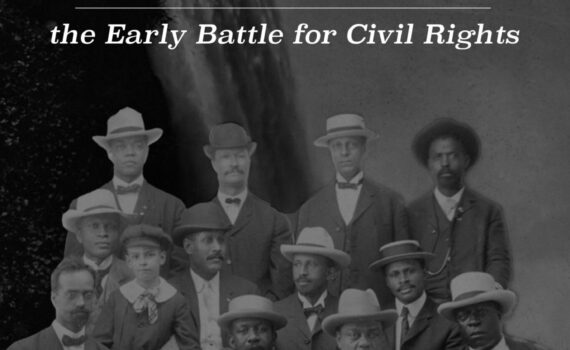
This 57-minute documentary, The Niagara Movement | The Early Battle for Civil Rights, explores the rise of the Black intellectual elite at the turn of the 20th century and the ideological conflict between W.E.B. Du Bois, William Monroe Trotter, and Booker T. Washington over how best to advance racial justice. In […]
This 45-minute video featuring neurocriminologist Adrian Raine offers a compelling exploration of how brain structure, genetics, and environment shape violent behavior. It fits well within a criminology module on psychological or biosocial theories. After screening the video in full during class, students can be asked to reflect by selecting one […]
This video explores the dark history of IQ testing and its ties to eugenics and discrimination. In a criminology module on psychological theories, it can prompt critical discussion on how psychological assessments, like those used in risk evaluations or sentencing, may carry historical biases. It encourages students to examine the […]
This video introduces Sigmund Freud’s psychoanalytic theory, emphasizing how unconscious drives and early childhood experiences influence behavior. In a criminology class, it can be used to explore psychological explanations of criminality, particularly how unresolved internal conflicts or early trauma may contribute to antisocial behavior. The video provides a foundation for […]
This short documentary from the American Museum of Natural History’s Science Bulletins series offers a compelling overview of attachment theory, first developed by psychologist John Bowlby in 1958. It emphasizes how early bonds between parent and child are critical for healthy emotional and physiological development, linking insecure attachment in early […]
This Last Week Tonight episode with John Oliver is a valuable resource for connecting modern surveillance technologies to historical biological perspectives in criminology. It highlights how facial recognition technology (FRT) can reflect the same flawed logic as pseudoscientific practices like physiognomy—the 19th-century belief that criminal traits could be identified through […]
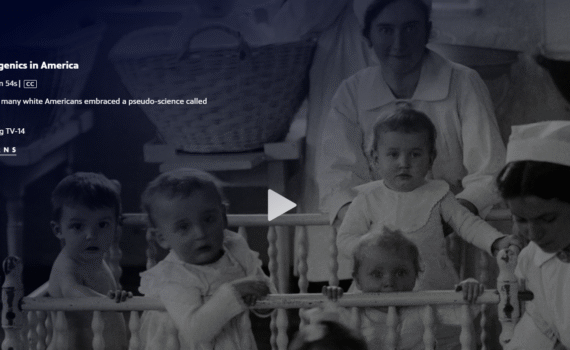
This excerpt from The U.S. and the Holocaust, a three-part documentary directed by Ken Burns, Lynn Novick, and Sarah Botstein, offers valuable context for criminology students examining biological theories of crime and their real-world consequences. The video explores how pseudo-scientific ideas about genetics, race, and criminality fueled American eugenics policies […]
This video traces the beginnings of biological explanations of criminal behavior—starting with early 19th‑century theories that labeled certain individuals as “born criminals” based on physical features—and highlights how evolutionary ideas and eugenics fueled forced sterilization and racial hygiene policies. For a class on biological perspectives, it provides valuable historical context: […]
This video explores Cesare Beccaria’s foundational arguments against the death penalty, making it highly relevant for criminology students studying classical theory and penal reform. It highlights Beccaria’s emphasis on proportional punishment, the immorality of state-sanctioned killing, and the importance of humane treatment. The video offers a concise introduction to his […]

This video introduces Jeremy Bentham’s Panopticon as a prison design rooted in his utilitarian philosophy, aiming to maximize control and minimize harm through constant surveillance. For criminology students, it illustrates how Bentham believed behavior could be regulated by making individuals feel they are always being watched, even if they are […]
This TED-Ed video by Alex Gendler introduces criminology students to key concepts like rational choice, guilt, and moral reasoning through Dostoevsky’s Crime and Punishment. It explores how Raskolnikov justifies murder and is ultimately undone by conscience, making it a powerful tool for discussing psychological and ethical dimensions of crime.
This short video by Professor Steve Case is an effective introduction to criminology because it challenges students to think critically about how crime is defined. Rather than viewing crime as simply breaking the law, Case explains that crime is a social construct shaped by cultural norms, power relations, and changing […]
This TEDx talk by Craig Pinkney can serve as a powerful introduction to criminology by grounding theoretical concepts in real-world experience. Pinkney discusses the root causes of youth violence—such as trauma, social exclusion, and systemic inequality—which align with key criminological theories like strain, social disorganization, and labeling. By using this […]
This video commemorates the 50th anniversary of the National Crime Victimization Survey (NCVS) and highlights its role in tracking unreported crime and shaping policy. It can be used in class to introduce students to victimization data, discuss the importance of measuring crime beyond police reports, and explore how crime surveys […]
This Vox video explains why many Americans believe crime is rising even when official data shows declines. It is useful in criminology to explore the gap between perception and reality, media influence on public opinion, and the importance of evidence-based crime policy.
This short video introduces the National Incident-Based Reporting System (NIBRS) and explains how it improves crime data collection and analysis. It can be used in criminology to illustrate the evolution of crime reporting, the importance of accurate data for public safety, and the connection between statistics and real-world law enforcement […]
This short documentary illustrates key elements of Labeling Theory through the lens of Stan Cohen’s classic study of Mods and Rockers. It shows how sensationalized media coverage in 1960s Britain helped construct a “moral panic” around these youth subcultures. The groups were labeled as “folk devils,” and society responded with […]
This lecture (in two parts) by renown criminologist John Braithwaite is a powerful resource for teaching Labeling Theory and its evolution. Braithwaite introduces the concept of reintegrative shaming—a restorative justice approach that condemns harmful behavior without permanently labeling the person as deviant. Unlike stigmatizing labels that push people deeper into […]
