

Daily Archives: July 22, 2025
16 posts

Gabbidon, S.L. (2001). W.E.B. Du Bois: Pioneering American Criminologist. Journal of Black Studies, 31(5), 581–599. http://www.jstor.org/stable/2668077

Chapter 13 in DuBois, W. E. B. (1899). The Philadelphia Negro (the Oxford W. E. B. du Bois), edited by Henry Louis, Jr. Gates, Oxford University Press, Incorporated, 2007. BMCC students and faculty have free access to this ebook with their CUNYfirst login credentials at ebookcentral.proquest.com/lib/bmcc/detail.action?docID=1657795
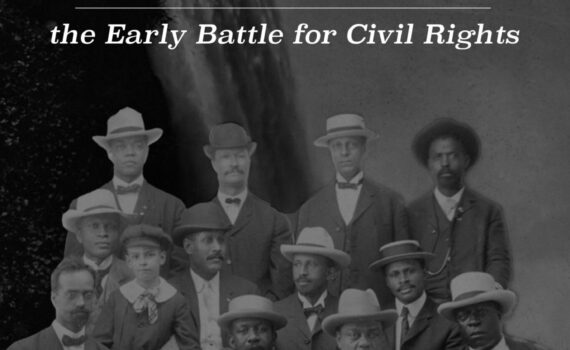
This 57-minute documentary, The Niagara Movement | The Early Battle for Civil Rights, explores the rise of the Black intellectual elite at the turn of the 20th century and the ideological conflict between W.E.B. Du Bois, William Monroe Trotter, and Booker T. Washington over how best to advance racial justice. In […]
This 45-minute video featuring neurocriminologist Adrian Raine offers a compelling exploration of how brain structure, genetics, and environment shape violent behavior. It fits well within a criminology module on psychological or biosocial theories. After screening the video in full during class, students can be asked to reflect by selecting one […]
This video explores the dark history of IQ testing and its ties to eugenics and discrimination. In a criminology module on psychological theories, it can prompt critical discussion on how psychological assessments, like those used in risk evaluations or sentencing, may carry historical biases. It encourages students to examine the […]
This video introduces Sigmund Freud’s psychoanalytic theory, emphasizing how unconscious drives and early childhood experiences influence behavior. In a criminology class, it can be used to explore psychological explanations of criminality, particularly how unresolved internal conflicts or early trauma may contribute to antisocial behavior. The video provides a foundation for […]
This short documentary from the American Museum of Natural History’s Science Bulletins series offers a compelling overview of attachment theory, first developed by psychologist John Bowlby in 1958. It emphasizes how early bonds between parent and child are critical for healthy emotional and physiological development, linking insecure attachment in early […]
Go to straight to the chapter on Pressbooks openoregon.pressbooks.pub/criminologyintro/part/chapter-5-psychological-theories-on-individuals-and-crime See the book on this hub site openlab.bmcc.cuny.edu/crj-102-criminology-oer-course-hub/textbook-zero-cost.
This Last Week Tonight episode with John Oliver is a valuable resource for connecting modern surveillance technologies to historical biological perspectives in criminology. It highlights how facial recognition technology (FRT) can reflect the same flawed logic as pseudoscientific practices like physiognomy—the 19th-century belief that criminal traits could be identified through […]

Promising Future, Complex Past: Artificial Intelligence and the Legacy of Physiognomy. (n.d.). [Exhibitions]. U.S. National Library of Medicine. Retrieved July 22, 2025, from https://www.nlm.nih.gov/exhibition/artificial-intelligence-and-physiognomy/index.html
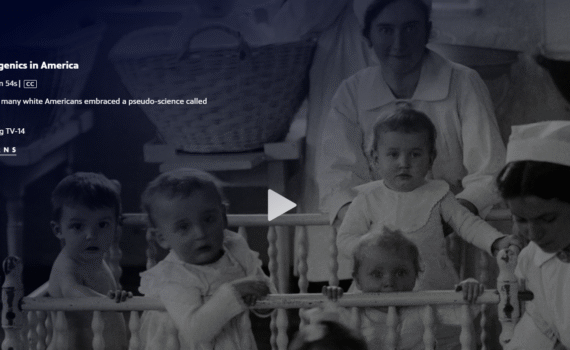
This excerpt from The U.S. and the Holocaust, a three-part documentary directed by Ken Burns, Lynn Novick, and Sarah Botstein, offers valuable context for criminology students examining biological theories of crime and their real-world consequences. The video explores how pseudo-scientific ideas about genetics, race, and criminality fueled American eugenics policies […]
This video traces the beginnings of biological explanations of criminal behavior—starting with early 19th‑century theories that labeled certain individuals as “born criminals” based on physical features—and highlights how evolutionary ideas and eugenics fueled forced sterilization and racial hygiene policies. For a class on biological perspectives, it provides valuable historical context: […]
Rocque, M., Welsh, B. C., & Raine, A. (2012). Biosocial criminology and modern crime prevention. Journal of Criminal Justice, 40(4), 306–312. https://doi.org/10.1016/j.jcrimjus.2012.05.003
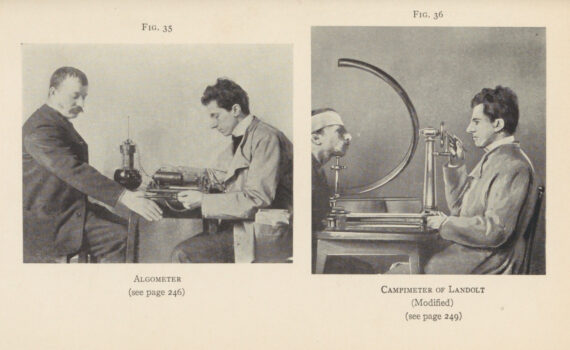
Kepner, P. (2018). Chapter 3: Laughing at Lombroso: Positivism and Criminal Anthropology in Historical Perspective. In Triplett, R.A. (Ed.). The Handbook of the History and Philosophy of criminology. John Wiley & Sons, Incorporated. BMCC students and faculty have free access to this ebook with their CUNYfirst login credentials at ebookcentral.proquest.com/lib/bmcc/detail.action?docID=5144712
