Jamison Jimenez Discussion Board 6.2

1)What concept that we have already discussed does “faction” remind you of?

“Faction” reminds me of social classes because it is a group of people who share similar interests and goals.

2)According to Federalist #10 (written by James Madison), what is the source of wealth (private property)? What factor explains why some people get to possess wealth by owning private property, and others don’t (thus remaining poor)?

Madison believed wealth comes from people having different abilities and opportunities to gain property. These differences can cause some people to become wealthy while others stay poor.

3)Do you agree with this explanation of wealth and poverty?

I don’t fully agree because becoming wealthy is not only about someone’s abilities. Some people have more opportunities and advantages than others.

4)What is the core mission (“first object”) of the US government? Does this surprise you, does it sound different from what our society today seems to suggest the core mission of the government is? Explain.

Madison says the government’s “first object” is to protect people’s different abilities to gain and own property. This surprised me because today we usually think the government’s main job is to protect everyone’s rights and safety.

5)Given the discussion in questions 1-4, are you surprised that Federalist #10 is not in favor of democracy, and supports a Republican (representative) form of government? Why would the author dislike a (pure) democratic form of government?

I’m not really surprised because Madison worried that the poorer majority could have more power over the wealthy minority. He believed a representative government could limit that power.

Jamison Jimenez Discussion Board 6.1

1)Based on the arguments presented in Readings 6.1 and 6.2, which social class wrote the Constitution, and which class was excluded and not allowed to participate in this process? In your comment, make sure you clearly specify the difference between the two classes by giving examples from the readings.

The Constitution was mainly written by the wealthy upper class, like rich landowners, merchants, and people who owned a lot of property. The working and poorer classes were mostly left out of the process. The readings show that wealthy people had more political power, while regular workers and people without property had much less of a say in the government.

2)Would you say that the social class structure of early United States society was the same as ours today, or different? Explain.

I would say the social class structure was different from today. Back then, wealthy landowners had most of the power and poorer people had little say. Today, more people have rights and can participate in government, even though rich people still have more influence.

3)Why were the people who wrote the Constitution so afraid of democracy? Hint: Think about how to answer this question by discussing it in terms of social classes.

The people who wrote the Constitution were afraid of democracy because they thought the lower and working classes could gain too much power. They worried that poorer people would use voting to make decisions that could hurt the wealth and property of the upper class.

Jamison. Jimenez Discussion Board 5.3

1. Which statistic on wealth inequality in the US (discussed on p. 29) made the biggest impression on you? Explain why? The statistic that stood out to me the most was that the top 1% owns about 40–50% of the nation’s total wealth, which is more than the bottom 90%. This surprised me because such a small group has so much of the country’s wealth.

2.What could be some of the implications of living in a society that has such huge wealth inequalities? Do you see this dynamic getting played out in everyday life in our society? How so? Example? I do see these dynamics being played out in our society, especially with college students. Some students can afford tuition, books, and other expenses, while others have to work while going to college to help pay for everything. This can make college harder for students who don’t have as much money.

Jamison. Jimenez Discussion Board 5.2

As we learned thus far, the capitalist class consists of people who own wealth, as well as the means of production in American society. An important question in understanding how this class works is to ask: how does a capitalist remain wealthy? The answer to this question depends largely on understanding the diagram M-C-M. So, let’s practice by explaining what happens in this diagram in our own words (but basing our ideas on Reading. 5.I). Respond to the following question: Explain M-C-M’ to show how capitalists maintain and increase their wealth. (hint: your answer should weave a summary that includes what you reviewed in the self-assessment exercise question 1-7).

M-C-M’ means money is used to buy things needed for production, like materials and labor. Those things are used to make products that are sold for more money. The extra money is the profit, which allows the capitalist to increase their wealth.

Jamison Jimenez Discussion Board 5.1

1. Means of production and labor:
The means of production are the tools, machines, and places used to make things. For example, a factory is a means of production. Labor is the work people do to make something, like a worker making clothes.

2. Value:
Value is how useful or important something is to people. Something can have value because people need it, want it, or are willing to pay for it.

3. Labor and value:
Labor helps create value because people put their time and effort into making products or providing services.

4. Labor vs. labor power:
Labor is the actual work someone does. Labor power is a person’s ability to work, including their skills, time, and energy.

5. Surplus value:
Surplus value is the extra value workers create that they don’t get paid for. For example, if a worker makes $500 worth of products but only gets $200 in wages, the extra value helps create profit for the business.

Jamison Jimenez Discussion Board 4.2

1) Owners are people who own businesses or companies and make money from other people’s work. Employees work for the owners and get paid wages. For example, a restaurant owner is an owner, while a waiter working there is an employee.

2) I think Adam Smith is saying that labor is what gives things their value. People have to work to make products and provide services, which helps create wealth.

3) I agree because class is more about your position in the economy than who you are as a person. Your job, income, and whether you own a business can affect your class.

4) It means workers depend on owners for jobs, while owners depend on workers to do the work that makes them money. For example, a store owner needs employees to run the store, and the employees need the job to earn money.

Jamison Jimenez discussion board 4.1

2. The Subway Station closest to where I live is Knickerbocker Avenue Station by Bushwick served by the M train.

Based on the concepts from reading 4.1 the social classes that are mostly seen around knickerbocker avenue are the working class and middle class.

I think this makes sense because the area has a mix of families, workers, and small business owners. The different types of stores, apartments, and people in the neighborhood show that knickerbocker avenue has a diverse community with people from different economic backgrounds.

Jamison Jimenez – State Apparatus

What Is RSA ?

A repressive state apparatus is something the government uses to control people, usually through rules, punishment, or force.

Althusser calls it ” repressive” because it can make people follow the law even if they do not agree with it. Like police, courts, prisons, and the military.

For example, the police can arrest someone for breaking the law.

What is Isa ?

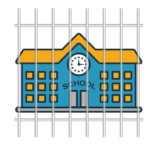
Ideological state apparatuses are things like school, families, churches, the media, and other organizations that influence the way people think and act. They work by teaching people certain beliefs, values, and ideas about how society should work. For example school teaches students rules and behaviors that are expected in society.

RSA vs ISA

The main difference is how they control people. Repressive state apparatuses mainly use laws, punishment, or force to make people follow rules. Ideological state apparatuses mainly use ideas, beliefs, and values to influence people. For example, the police can punish someone for breaking a law, while a school can teach students why following rules is important.

Example of ISA

This image symbolizes time and discipline meaning it requires students to attend classes on time and complete assignments, and to follow rules.

The current image has no alternative text. The file name is: image-1.png

Jamison Jimenez – What Is Ideology?

How I understand Ideology

I think ideology is a person’s beliefs and ideas about how society and the government should work. It can affect how people think about different political and social issues. People can get their beliefs from their family, friends, school and their own experiences.

For example one person might believe the government should help people who are struggling, while another person might think people should be more responsible for themselves.

Conservative vs liberal ideology

I think the main difference between conservatives and liberals is their views on government and change. Conservatives usually prefer more traditional ideas, less government involvement, and individual responsibility. Liberals are usually more open to social changes and believe the government should do more to help people.

For example, liberals may support more government programs to help people who need assistance, while conservatives may believe the government should have a smaller role.

Althusser’s definition of ideology

I understand Althusser’s definition of ideology as the idea that our beliefs can influence how we see ourselves and the world around us. Sometimes we may not even realize that our surroundings are affecting the way we think.