Kristin Scarola’s Profile

Courses

ECE 211 Curriculum for Young Children – Fall 2026
This course is an introduction to the theories, methods and materials of curriculum planning in early childhood education (Preschool – Grade 2), with an emphasis on providing developmentally and culturally appropriate learning environments and experiences that encourage creativity in young children. The following topics are explored in depth: the intellectual and emotional importance of fostering creativity, the role of play in learning, the design of effective arts-based learning environments; the role of visual arts, music, movement and language arts/emergent literacy in developing children?s cognitive, social-emotional, physical, language and self-help skills. Course work includes workshops in planning and implementing creative arts experiences for young children.

ECE 110-112 Psychological Foundations of Early Development and Education – Spring 2022
This course examines the psychological and social foundations of early childhood and relates these foundations to educational practice with young children, birth to eight years. It focuses on historical and contemporary theories of childhood development. Early learning is considered in relation to biological factors, child and family, program, and socioeconomic factors, particularly in diverse urban settings. Young children’s physical, cognitive, communicative, social and emotional development are explored as contributors to and as consequences of early learning experiences. This course requires 15 hours of fieldwork, which students complete by enrolling, attending and participating in the ECE 110 fieldwork seminar (ECE 110S).
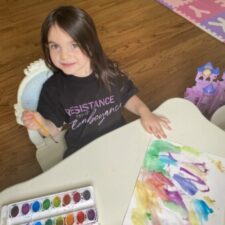
ECE 211 Curriculum for Young Children – Spring 2024
This course is an introduction to the theories, methods and materials of curriculum planning in early childhood education (Preschool – Grade 2), with an emphasis on providing developmentally and culturally appropriate learning environments and experiences that encourage creativity in young children. The following topics are explored in depth: the intellectual and emotional importance of fostering creativity, the role of play in learning, the design of effective arts-based learning environments; the role of visual arts, music, movement and language arts/emergent literacy in developing children?s cognitive, social-emotional, physical, language and self-help skills. Course work includes workshops in planning and implementing creative arts experiences for young children.

ECE 211 Curriculum for Young Children 1 – Fall 2023
This course is an introduction to the theories, methods and materials of curriculum planning in early childhood education (Preschool – Grade 2), with an emphasis on providing developmentally and culturally appropriate learning environments and experiences that encourage creativity in young children. The following topics are explored in depth: the intellectual and emotional importance of fostering creativity, the role of play in learning, the design of effective arts-based learning environments; the role of visual arts, music, movement and language arts/emergent literacy in developing children?s cognitive, social-emotional, physical, language and self-help skills. Course work includes workshops in planning and implementing creative arts experiences for young children.

ECE 211 Curriculum for Young Children 1 – Fall 2022
This course is an introduction to the theories, methods and materials of curriculum planning in early childhood education (Preschool – Grade 2), with an emphasis on providing developmentally and culturally appropriate learning environments and experiences that encourage creativity in young children. The following topics are explored in depth: the intellectual and emotional importance of fostering creativity, the role of play in learning, the design of effective arts-based learning environments; the role of visual arts, music, movement and language arts/emergent literacy in developing children?s cognitive, social-emotional, physical, language and self-help skills. Course work includes workshops in planning and implementing creative arts experiences for young children.
Communities

A collaborative space for BMCC faculty to connect around topics such as teaching and learning, scholarship, career development, and digital education.

Open Education Seminars | Summer 2026
A virtual learning community for faculty who are participating in summer 2026 OER/ZTC Course Redesign seminar or the AI-resistant Open Assignment seminar. (Image credit: “Open & Bubbly” by Tim Mossholder is used under Unsplash license)

BLA & Conexiones & Connections Trauma Informed Pedagogy Workshop Summer 2021
This community is open to all interested in trauma informed pedagogy, but was designed for the BLA and Conexiones & Connections Trauma Informed Pedagogy Workshop series in August 2021.
Projects

Why Men’s Participation Must Become a Structural Priority in U.S. ECEC Systems
This paper reframes male underrepresentation in ECEC not as a cultural inevitability but as a structural challenge requiring coordinated policy action.

The website offers support and updates on assessment topics at the faculty level