Ovo-uterine reproductive anatomy and function

The ovo-uterine (so-called female) reproductive and sexual anatomy includes the vulva (the external parts) and various internal organs like the uterus and ovaries. Read more about the various organs and parts that make up this anatomy here – https://www.plannedparenthood.org/learn/health-and-wellness/sexual-and-reproductive-anatomy/what-are-parts-female-sexual-anatomy

Image showing organs of the female reproductive system including external and internal anatomy.
From https://commons.wikimedia.org/wiki/File:Anatomical_charts_of_the_genital_system-UNIGE_SSI-3Den.pdf

Breasts are also part of the reproductive and sexual anatomy – read more about the form and function of breasts here https://www.scarleteen.com/article/advice/abreast_the_basics_of_boobies.

During puberty, people with a uterus and ovaries typically begin the menstrual cycle. There are three phases of the cycle and it repeats on average every month (but there is a lot of individual variety). It includes ovulation (the release of an ovum or egg) and correspond to a period of fertility (the ability to become pregnant). Some people will have irregular periods, while others have very regular cycles (it can range in the number of days). Read more here https://www.scarleteen.com/article/bodies/on_the_rag_a_guide_to_menstruation. The main hormones that ovaries produce are estrogen and progesterone.

Reproductive and sexual care for this type of anatomy includes regular check-ups with a gynecologist (between every 1 and 3 years) for a procedure called the Pap smear which tests for cervical cancer as well as other tests and screening, HPV vaccination, regular STI tests if the person is sexually active with another person, and understanding contraception choices. Some fairly common health issues include: PCOS, endometriosis, uterine fibroids, PMS (premenstrual syndrome) and dysmenorrhea.

At the end of fertility for people who menstruate, they will typically go through a process called menopause, which is a change in the production of hormones and the end of ovulation.

Testicular reproductive anatomy and function

The testicular (so-called male) reproductive and sexual anatomy includes the penis and scrotum (the external parts), and internal reproductive organs. Read more about the names and function of these organs here – https://www.plannedparenthood.org/learn/health-and-wellness/sexual-and-reproductive-anatomy/what-are-parts-male-sexual-anatomy

Image showing the organs of the male sexual and reproductive system.
From Bioscope, HUG (Hôpitaux universitaires de Genève), DIP (Département de l’Instruction Publique), Odile Fillod

Some penises are circumcised and some are not. If parents choose to do this for their infants, they will usually do it very close to birth. There are cultural and religious reasons for circumcision, and there may be some health benefits, but routine circumcision is no longer recommended in the United States.

People with testes should do a testicular self-exam monthly. Other care for reproductive health includes HPV vaccination, regular STI exams if they are sexually active with another person, and contraception if they engage in sexual activity with people who may get pregnant.

The main hormone produced by testes is testosterone (though all people produce both estrogen and testosterone). This hormone is responsible for many things like sex drive, sexual development and maturity, and so on.

While people with typical male anatomy do not have an equivalent to menopause and thus may remain fertile until the end of life, some may experience a drop in their testosterone levels as they get older. Read more here – https://www.mayoclinic.org/healthy-lifestyle/mens-health/in-depth/male-menopause/art-20048056?p=1.

Healthy sexual activity

Being sexually healthy begins before sexual activity takes place and may include learning about your sexual and reproductive organs, going through the changes of puberty, learning to deal with the menstrual cycle, and so on. Young children learn about their sexual organs through exploration and may begin stimulating them because it brings them pleasure. This type of exploration is quite normal.

After puberty and sexual maturation begins, there may be some changes like ejaculation for people with penises and testes. People will need to learn how to start taking good care of their sexual and reproductive organs (see the Female and Male reproductive system posts). And people will want to develop a healthy sex life . This can include a variety of sexual activity, with other people or not.

Scientists started to study sexual response in the 1950s and 1960s and developed several ways to understand how human bodies react during desire, arousal and orgasm. Read more here – https://my.clevelandclinic.org/health/articles/9119-sexual-response-cycle. Often, sexual response starts with desire, which is something that happens in our brains when we think about something arousing, or we feel close to our partner, or we experience sensations (which includes images or sounds) that we find exciting. Other models of sexual response have been proposed since this early research – ones that consider non-linear sexual response and how desire is linked with sexual response.

Image showing typical male and female sexual response cycles with excitement, plateau, and orgasm phases.
Human sexual response as described by Masters & Johnson

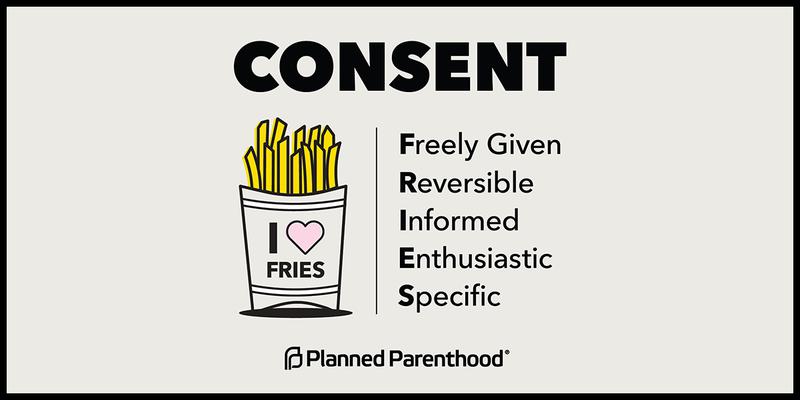
When we decide to have sex with other people, it is important to communicate about sex and set expectations with each other. People may want to discuss what they like and don’t like, consent, and safer sex. Read more here – https://www.plannedparenthood.org/learn/sex-and-relationships/sex/how-do-i-talk-my-partner-about-sex.

Healthy relationships

Humans are social animals – we need some level of social support and social networks in order to be fully healthy. We form relationships from birth and require things like love and nurturing in order to stay socially healthy.

Our first relationship is usually with family – they raise us, they teach us, and they model love. We learn our communication patterns and coping skills from family, whether it is a mother and father, a single parent, a grandparent or aunt/uncle, an adoptive family, or a foster family.

There are several different conceptions of love. One is Dr. Robert Sternberg’s triangular theory of love, which identifies three main components: intimacy, passion and commitment. Different types of relationships may exhibit different types of love.

Dr. Helen Fisher has been studying what happens in the brain during love – see the video below.

There is a spectrum of positive and negative traits in relationships. Healthy relationships are based on equality, independence, and respect. https://www.loveisrespect.org/wp-content/uploads/2017/07/Relationship-Spectrum-final.pdf It’s also important to set expectations for your relationships and keep healthy boundaries – https://www.loveisrespect.org/pdf/Healthy_Relationships.pdf

Communication is important for healthy relationships. Here are some things important for good communication – https://www.loveisrespect.org/healthy-relationships/communicate-better/. Additionally, partners must understand each others’ ways of communicating so that they have more realistic expectations – https://www.psychologytoday.com/us/blog/contemplating-divorce/201502/how-do-you-define-love.

Interpersonal violence

Content warning: abuse and violence

On one side of the relationship spectrum are healthy relationships and on the other are abusive relationships or intimate partner violence (IPV). This type of violence happens in various relationships – family, friend or romantic and is quite common – https://www.cdc.gov/intimate-partner-violence/about/index.html.

IPV can take many forms like physical, verbal or emotional, and sexual violence, and stalking. Other recognized forms include financial control, isolation from family and friends, and monitoring people’s movements and activities. Read about signs of IPV here – https://www.womenshealth.gov/relationships-and-safety/domestic-violence/signs-domestic-violence. It is possible to experience IPV in same-sex relationships. Mainly people experience similar signs of IPV, with a few other possibilities like threats to “out you” to your family or telling you that police won’t help people who are LGBTQIA+.

Another common form of interpersonal violence is sexual assault and rape. People of all sexes can experience sexual assault and help is available to all. People often experience feelings of guilt and shame and thus don’t seek help. There are also common myths that people believe about sexual violence – see a list of myths and facts here: https://www.ourresilience.org/what-you-need-to-know/myths-and-facts/.

Both of these types of violence can have a profound effect on people’s health and it is important to prevent them whenever possible through laws, policies, and cultural norms. Teaching kids about consent and bodily autonomy can be a first step in creating healthier relationships in the future.

Sexual identity

There are many aspects of sexual identity that are complicated and interrelated, including our biological sex, our gender identity and expression, our attractions and our behaviors.

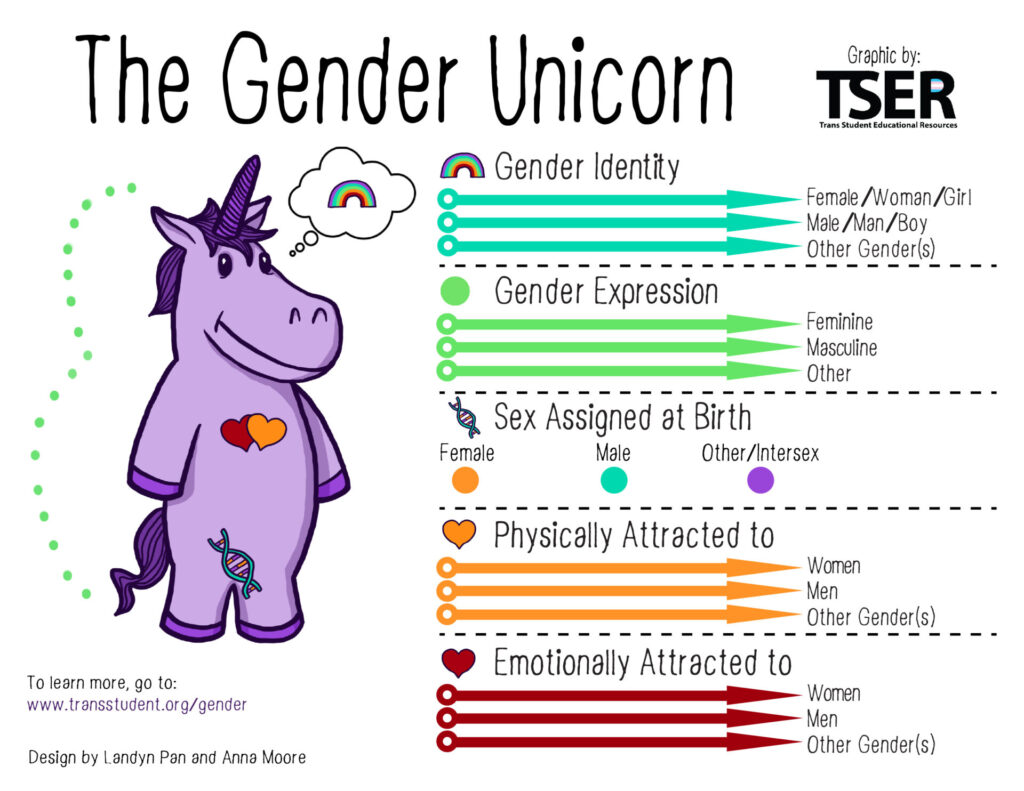
The gender unicorn shows the complexity of gender, sex, and sexual orientation. Note that sex (what some call biological sex) is not the same as gender and that these are also separate from one’s attraction to others.

A purple unicorn. There are 5 sections with several arrows in each (arros read female, male, and other). The sections read: Gender identity, gender expression, physically attracted to and emotionally attracted to. The fifth section reads Sex assigned at birth with the options Female, male and other/intersex.
Source: Trans Student Educational Resources

Here is a current (though not complete) list of terms that people use in relation to sex, gender, and sexual orientation – https://transstudent.org/about/definitions/

Even something as “simple” as biological sex, or the formation of one’s genitals and gonads, is not as simple as first thought. Scientists have identified many different possibilities that don’t exist on a simple binary of male and female – https://www.scientificamerican.com/article/sex-redefined-the-idea-of-2-sexes-is-overly-simplistic1/.

Sex is different from gender and gender identity. People may express their genders in different ways and gender can be outside of the binary of masculine and feminine. However, society endorses certain gender roles and stereotypes that people may adhere to or reject. Sometimes people may feel that their gender identity does not match the biological sex they were assigned at birth – these people often identify as transgender.

Sexual orientation is how we think about our sexual and romantic attractions. Common terms include lesbian, gay, bisexual, straight and others. Orientation may be complicated by attraction versus behavior – some people may act on their attractions, while others may only think about them. Some people may not experience any sexual or romantic attractions and thus may identify as asexual or aromantic.

People who are sexual minorities may face stigma, social isolation, and lack of acceptance by family and friends. This may make them prone to more depression and anxiety, sexual assault, interpersonal violence, and suicide. There may also be legal issues of discrimination or unequal protection under the law.

Nicotine/Tobacco

Tobacco is a plant that has a long history of cultivation in North America. It was a very important crop for the Native Americans, and eventually became a cornerstone of economic development in the United States.

The drug in tobacco that makes it addictive is nicotine. It is a mild stimulant and has several effects on the body. People use tobacco in several ways – most often people smoke cigarettes, but they can use it in other ways as well, like chewing it or inhaling vapor from e-cigarettes. Read more here https://www.drugabuse.gov/publications/drugfacts/cigarettes-other-tobacco-products.

Cigarette smoking is one of the most harmful health behavior because it is the number one cause of preventable death in the United States. Risks include cancer, cardiovascular disease, chronic obstructive pulmonary disease, and negative effects on reproductive health. Some of these risks are from nicotine, and some are from other substances that are contained in the smoke from tobacco products. Additionally, the smoke from cigarettes and other smoked products can affect the health of others. This is called secondhand or passive smoking and is linked to illness and death (see previous link for more details).

Pie chart showing annual deaths from smoking in the US. Main causes are heart disease (33%), lung cancer (29%), chronic obstructive pulmonary disease (21%), and others.
From CDC.gov
Image shows graphic of a human body that highlight the dangers of smoking. This includes cancers of the mouth, throat, lungs, stomach, liver, pancreas, kidneys, cervix, bladder and colorectal. This also includes increased risk of stroke, blindness, heart disease, respiratory diseases like pneumonia and chronic obstructive pulmonary disease, diabetes, reproductive and sexual health effects for both men and women, and reduced immune function.
From CDC.gov

People use tobacco in a variety of products – smoked and smokeless. The forms of tobacco available on the market currently include: cigarettes, cigars, vapes and e-cigarettes, hookahs, pipes, chewing tobacco, and snuff.

There has been a rise in the use of e-vaporizers or e-cigarettes in recent years. These products are not regulated in the same way as other tobacco products. They still deliver nicotine to the user (and are thus addictive), as well as a host of other chemicals which may be carcinogens. Recently, several cases of severe respiratory illness and one death was linked to the use of e-cigarettes.

While rates of tobacco smoking have been steadily declining in recent years (about 18% of adults use any tobacco products and about 10% of high school students use e-cigarettes), there is no safe level of smoking or using tobacco.

Image that says cigarette smoking is down but about 34 million american adults still smoke. Certain groups smoke more - men, adults 25-64 years old, people with lower education and living below the poverty level, uninsured or on medicaid, american Indians and Alaskan natives, and LGBTQ people.
From CDC.gov

Many people want to quit smoking or using tobacco, but they may not know how to start. There are many free and local resources available for quitting. Benefits of quitting are many and include a lower risk of illness and death, as well as less coughing, better breath and a brighter smile.

Alcohol

A legal recreational drug that some people enjoy is alcohol (or ethyl alcohol, ethanol). Most people over the age of 18 have tried alcohol at one time point in their lives, and a little over half say they’ve drank in the past month. Read more here – https://www.niaaa.nih.gov/publications/brochures-and-fact-sheets/alcohol-facts-and-statistics. The legal age to buy alcohol beverages in the US is 21.

Ethyl alcohol is produced by either fermentation or distillation. Fermentation is a natural process of conversion of sugar to alcohol in plants – typically wine and beer is produced by this method. Distillation involves heating alcohol and then condensing the vapor, producing a higher percentage of alcohol by volume. Any liquor over about 12% of alcohol by volume is produced by distillation. In the US, you may also see that alcohol has a “proof” listed on the bottle – this is twice the percent of alcohol by volume. So a liquor that is 80 proof is 40% alcohol by volume.

Long term drinking increases risks for certain health conditions – https://www.niaaa.nih.gov/alcohols-effects-health/alcohols-effects-body Excessive drinking can also lead to injuries and even death, as well as alcohol use disorder – https://www.rethinkingdrinking.niaaa.nih.gov/How-much-is-too-much/Whats-the-harm/What-Are-The-Risks.aspx.

How alcohol affects you when you consume it depends on BAC or blood alcohol concentration – defined as the percent of alcohol in your blood stream by volume. Even small changes in your BAC can lead to impaired motor function, attention, coordination, speech, and memory. If you binge drink (or bring your BAC to 0.08 or higher), you may be at risk for serious consequences, including overdose. https://www.niaaa.nih.gov/publications/brochures-and-fact-sheets/understanding-dangers-of-alcohol-overdose

As BAC increases, so does impairment. This graphic shows different BAC levels and what kind of impairment you may feel. At .0-.05%, there is only mild impairment (mild speech, memory, attention impairment, relaxation, sleepiness). At .06-.15% people may feel intoxicated, aggressive, and speech, memory, attention is more impaired, as well as driving skills. At .16-.30% there is significant and dangerous impairment, judgment and decision-making is impaired, blackouts may occur, as well as vomiting and loss of consciousness. Anything above this is considered life-threatening.
From NIAAA

Some people may be more at risk when they consume alcohol, including college students – https://www.niaaa.nih.gov/publications/brochures-and-fact-sheets/college-drinking.

Signs of alcohol use disorder include feeling sick when not drinking, feeling out of control when it comes to drinking, and continuing to drink even though it’s cause you problems. There may be a genetic risk as well – people whose close family members suffer form this disorder may be at higher risk themselves. However, treatment is available through counseling, medications, and peer support. https://www.niaaa.nih.gov/publications/brochures-and-fact-sheets/treatment-alcohol-problems-finding-and-getting-help

Air pollution

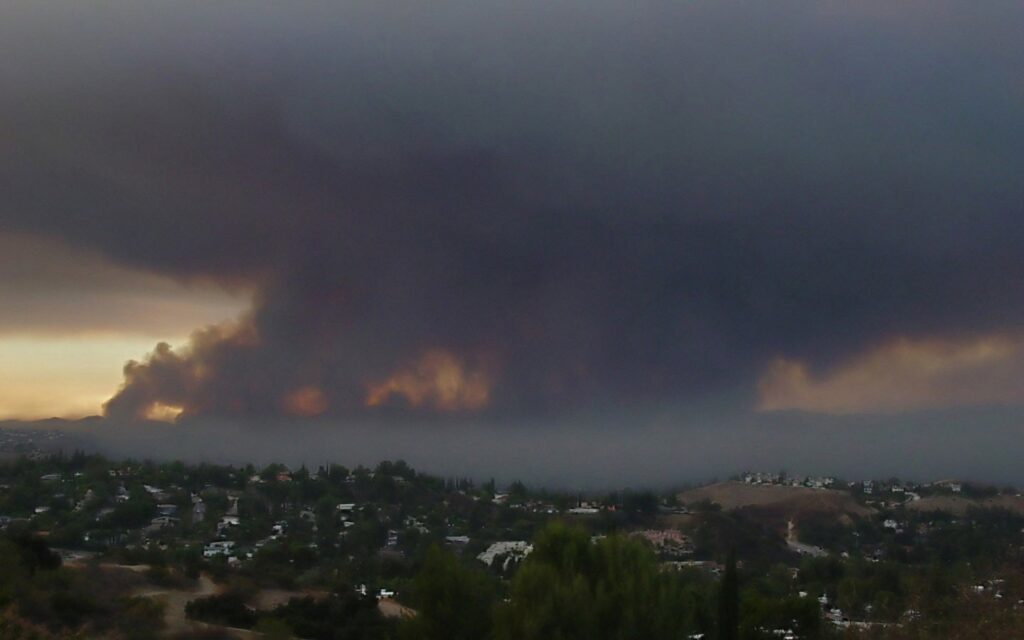
Photo of a town with a big cloud of smoke over it. The air pollution is coming from a wildfire.
Air pollution from wildfire

We require air to survive, but a lot of human activity has contributed to air pollution. This can be indoors air pollution and outdoor air pollution – these usually come from slightly different sources.

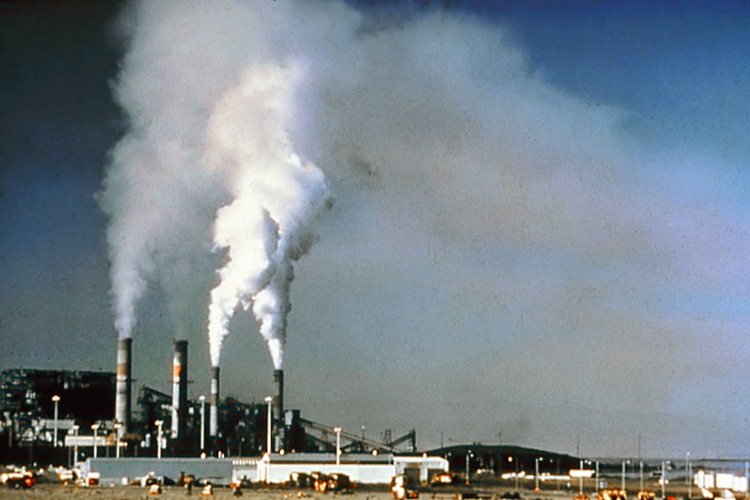
Photo of a factory with billowing smoke coming from the pipes.
Air pollution from industrial sources

Air pollution can be natural – from volcano eruptions, dust storms, pollen and wildfires. It can also be anthropogenic (made by humans) – this includes pollution from vehicles, power generation, chemical use in manufacturing and certain services, and other sources.

Outdoor air pollutants include exhaust from automobiles, heat and power generation, emissions from manufacturing plants, and so on. Read about major pollutants here – https://www.epa.gov/criteria-air-pollutants. Be sure to click through all of the pollutant types page: ozone, particulate matter, carbon monoxide, lead, sulfur dioxide and nitrogen dioxide.

These pollutants have a harmful effect on human health, including lung health, headaches, cardiovascular disease, and even outcomes of pregnancy. Read more here https://www.niehs.nih.gov/health/topics/agents/air-pollution.

You can check the air quality index (AQI) here https://airnow.gov/ and be aware that heat makes poor air quality effects worse. If you have asthma or other lung problems or if you like to exercise outdoors, check the air quality index, especially on very hot days. The AQI is color coded with green showing good air quality, yellow and orange showing elevated levels of pollution that affects at-risk populations, and red and darker colors showing dangerous and potentially harmful levels for all people. If outdoor air quality is shown as hazardous, the recommendation is to stay indoors, use good quality face masks when going outside, and use air filters indoors.

Climate change

You may have heard the term global warming, or the more current term climate change. But how can this affect our help? And what is it, exactly?

The Earth’s climate fluctuates, as can be seen in the history of our ice ages. However, right now we are experiencing a period of global temperature rise, which has led to many other changes in our climate. Most scientists believe that at least some part of the global warming effect has been due to human-made changes like the burning of fossil fuel, land use, and industry.

Image illustrating the Greenhouse effect. Some solar radiation is reflected by the earth and its atmosphere, but some passes through and is absorbed and re-emitted by greenhouse gas molecules. The effect is to warm the Earth's surface and lower atmosphere.
From EPA.gov

Greenhouse house gases are those that trap heat in the atmosphere and include carbon dioxide and methane – read more here https://www.epa.gov/ghgemissions/overview-greenhouse-gases.

Read more about the changes we can expect in different regions of the United States https://grist.org/article/we-broke-down-what-climate-change-will-do-region-by-region/. Some changes include less rainfall leading to droughts and less food production, more wildfires, more pollen and poor air quality, more common and severe storms and weather events, changes in animal habitats, and others. There may also be an increase in certain types of diseases, especially food and water-borne, and vector-borne (spread by insects). Finally, there will be higher temperatures and changes in precipitation and sea level rise – drowning some regions and drying out others.

All of these factors will also lead to increased migration all over the world, as crop yield decreases, temperatures increase, coasts flood, and wild fires and other environmental disasters push people out. This may lead to concentration of people in urban areas, with attendant issues like poverty, violence, gang activity, and others. Read more here – https://www.nytimes.com/interactive/2020/07/23/magazine/climate-migration.html (you may need to sign up for a free New York Times student account).

Sea level rise

Climate change is a great threat to human health all over the world – https://www.who.int/news-room/facts-in-pictures/detail/health-and-climate-change.