Author Archives: Hillary

Content Response #6

Learning about the women who were the catalyst for the progression of women’s rights and whose plight is responsible for my rights today was very eye-opening and inspirational. Starting but not limited to the 1800s, women were viewed as nothing more than an extension of their husbands. Something to be seen and not heard. They weren’t allowed a say in their education, reproductive systems, or suffrage. It is insane to think about an individual not having a say in a system that directly impacts them in so many ways.
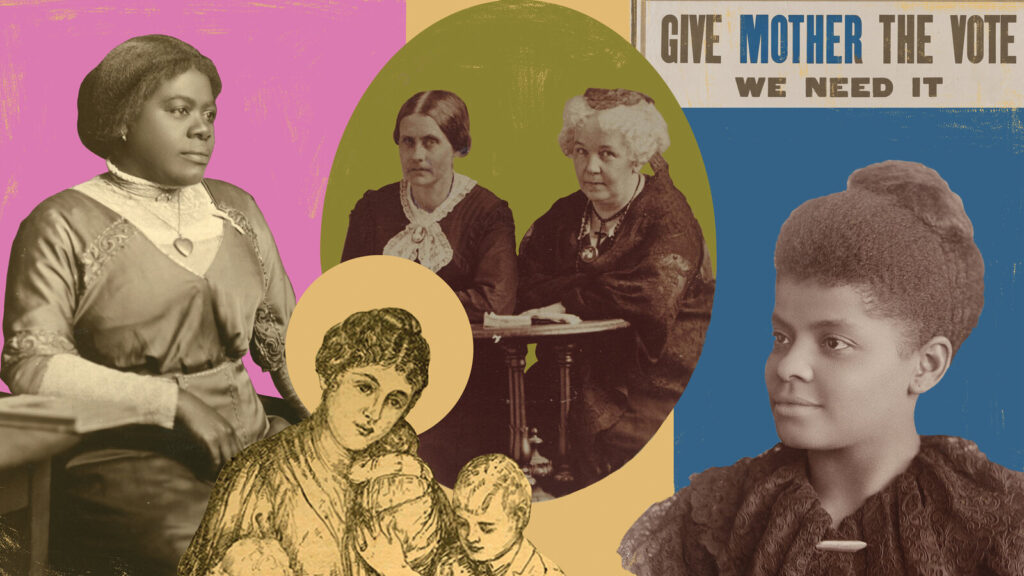
In “One hundred years of Suffrage”, a timeline compiled by E. Susan Barber. They share that in 1776, whilst our second ever president of the United States, John Adams was aiding in writing the Declaration of Independence, his wife, Abigail Adams, wrote to him asking that he and the other men at work with the document, “Remember the Ladies.” Now, think of what a slap in the face it must have been to Abigail, who was not only the First Lady of the United States, the woman to represent all women, but she was also John Adams closest advisor must have felt when she saw the phrase, “all men are created equal” on a document depicting the triumph and moral code of her country. I thought it was amazing that Abigail asked her husband for representation, as women in the 18th century are stereotypically viewed as shy and reserved. That is certainly not the case for the women I learned about in class this week. Once the fifteenth amendment was ratified, granting black men in the United States the right to vote in the late 1800s, suffrage became a movement for women, led by women. “In 1866 Elizabeth Cady Stanton and Susan B Anthony from the American Equal Rights Association, an organization for white and black women and men dedicated to the cause of universal suffrage.” (One Hundred Years of Suffrage) In the video, “Untold Stories of Black Women in the Suffrage Movement” I learned about the 22 college-aged women who founded Delta, Sigma, Beta sorority incorporated. These women knew that it was important to have a voice as they marched, albeit all the way in the back, in the women’s suffrage march. They are an inspiration to all that join the sorority today, and to all the women who understand the bravery, it took for these women to take a stand.

In Erika’s snapshot, there is a picture of Ida B. Wells included. Her tragic upbringing and amazing role in black women’s suffrage should never go unnoticed as she is nothing short of inspiring. She founded the Alpha Suffrage Club in 1913 in order to rally more women to insert themselves into politics. She marched in the Women’s suffrage parade in Washington DC and even refused to march in the back after the parade leader’s white suffragette told her to. It is because of women like Ida that women of color were able to gain power during this time. Having someone spearhead this movement with such velocity and passion as Ida B. Wells certainly served in many women becoming inspired and gaining the confidence to join in on politics, marches, and the overall rhetoric of women’s suffrage.
Hillary Santiago Midterm

Question 1: How do systems of privilege and oppression function in our society? How do we combat these systems? 

Systems of privilege and oppression function in our society by deeming certain characteristics as an advantage or a disadvantage. Oftentimes, this is expressed by skin color, socioeconomic background, gender, and sexual orientation. Whether we want to admit it or not, the United States practices under a vastly religious regime. Anything not associated with Christian beliefs is subjected to a harsh critique. This includes gender identity, sexual orientation, skin color, religious beliefs, etc. None of these characteristics are exempt from oppression. Whilst most often white, gender-conforming Christians have a significantly more amount of privilege and are least likely to face systemic oppression. In Peggy McIntosh’s, “White Privilege: Unpacking the Invisible Knapsack” where they speak about how, “White privilege is like an invisible weightless knapsack of special provisions, maps, passports, codebooks, visas, clothes, tools, and blank checks.” Which is a perfect articulation of the many privileges that white people inherit as soon as they’re born, many of which go unacknowledged their whole lives.

Question 2: What is the concept of intersectionality and why is it important in women’s, gender, and sexuality studies? 

Intersectionality consists of analyzing what elements of someone’s identity combine to put them at a greater risk of discrimination and/or privilege. Women, for example, face discrimination just for being women. However, a black woman would face a different set of problems on top of gender inequality, as they’re now susceptible to racial bias. This concept works with men as well, as an Iranian man can be expected to not be picked over a white man for a work opportunity, despite being equally as qualified. In this particular example, their ethnicity, as well as their religion are aspects that could potentially affect the way that they’re viewed in society. On the oposite side of the spectrum, a gender-conforming, white male has a higher amount of respect in society.

Question 3: Why is it important to recognize patriarchy as a system and not an individual identity? 

It is important to recognize patriarchy as a system and not an individual identity because a system can be dismantled. An intangible construct is much harder to analyze as its ramifications are easily disregarded on the grounds of, “well, WE create the society we live in!” This mode of thinking is devoid of any responsibility, basically shrugging it off as, “this is just the way it is.” leaving the women that this system affects to continue settling for the short end of the stick. Examples of gender inequality include gender discriminations in the workplace, healthcare inequities, sexual harassment, forced arranged marriages, unrecognized domestic labor, etc. These problems shouldn’t continue to be ignored as their consequences lead to lifelong trauma, sickness, and even death for its victims.

Question 4: How is gender constructed and learned in our society? How do we perform gender?

Gender is constructed and performed before we even take our first blink into the world. Typically, the parent(s) of a child will conform to whichever sex the doctor tells them that their baby is, whether that’s discovered before or during birth. Many even begin buying their child items with colors associated with their gender, oftentimes this will include typically “masculine” colors for boys, like blue, green, brown, and more feminine colors for baby girls, like pink, yellow and purple. Many children grow up perfectly content with the expected behaviors of their preconceived gender, while others grow up feeling alienated as they do not resonate with the behavioral codes others of their gender seem to perform naturally. A little girl who shows more “masculine” traits is often labeled a “tomboy”. This is a faulty way of thinking as it suggests that male and female are the two default genders that a person could inherit and that any inclusion of the opposite gender in their personality can only be a subcategory of itself

Question 5: What is the difference between sex and gender? How are sex and gender conflated (converged and confused) within our culture? 

The difference between sex and gender is that sex is a completely biologically defined characteristic, whilst gender is a social construct many just adhere to. There are very particular stereotypes that each “gender” possesses that weren’t viewed as interchangeable up until very recent times. Now people have begun fighting back against the behavior that they are “expected” to have based on what reproductive organ they were born with. The world should be a safe place where anyone can express their gender identity confidently without having to worry about a hate crime or oppression. No one should feel tied down to what’s between their legs, it should be the least of anyone’s concern. 

Question 6: What is a double bind? How do double binds function within our society? 

A double bind is a dilemma where stereotypically “womanly” traits are viewed as valued but not respected. A woman who is nurturing is well-liked in most environments, however, she is not typically viewed as a leader by her peers. This Implicates that “feminine” and “masculine” characteristics cannot co-exist harmoniously, you have to be either-or. With the particular example of workplace environments, women who are respected and viewed as competent leaders are rarely liked by their peers. In the same vein, women who are considered “emotional” are viewed as “hysterical” or “irrational” whereas an emotional man is referred to as, “passionate”, “outspoken” or, “going against the grain.” These catch-22s can leave women feeling stuck between a rock and a dark place, as they must “check” their femininity at the door once entering their job to be viewed as competent as a  man.

Content Response #4

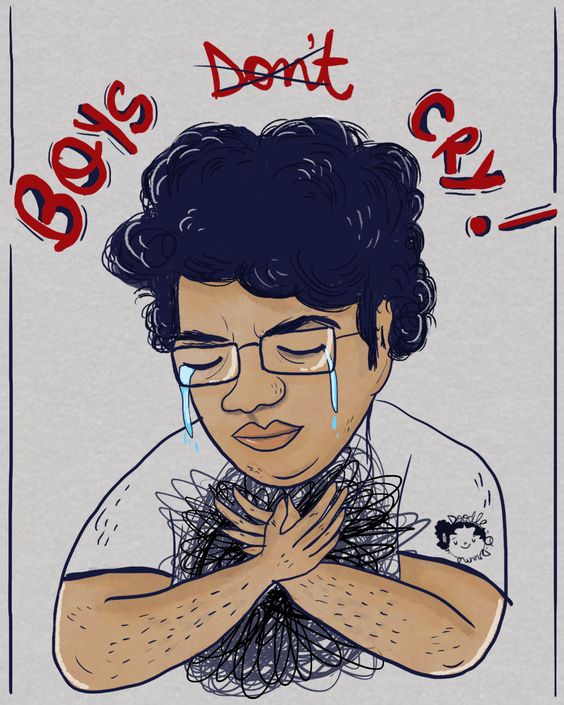
This week’s readings managed to perfectly articulate the concept of all of us participating in what we’ve labeled as “patriarchy”. Allen Johnson manages to deconstruct the idea that patriarchy is solely just men refusing to acknowledge their privilege or negating their oppression towards women. It is a much broader problem than that and it becomes clear that women are just as likely to participate in patriarchy as men. As it is a system which wouldn’t exist if it weren’t for the oppressors as well as the oppressed. I love the way Allen challenges the phrase that we hear people throw around every day, “we live in a society..” or the many people who blame “the system” for behavioral injustices committed against them, whether that be due to their race, gender or economic background. It takes a very insightful person to recognize that blaming “society” for the way people treat others is lazy at best and devoid of all accountability at worst. WE create society, with every decision that we make, the roles we choose to fill, or the injustices that we either conform to or ignore. This excerpt from Allen Johson’s, “Patriarchy the System” perfectly encapsulates this concept, “‘the system’ serves as a vague, unarticulated catch-all, a dumping ground for social problems, a scapegoat that can never be held to account and that, for all the power we think it has, cannot talk back or actually do anything.” This shows how much power we give a concept that ultimately cannot change on it’s own. It merely possesses life because WE do, like a parasite and its host. It is our job to eliminate this parasite, not feed it in hopes that we can somehow tame it, or that it leaves on its own. This is illogical.

In the same vein, I loved the writer’s exploration on how patriarchy negatively affects men as well as women, proving what so many feminists have been arguing for YEARS; men are better off without patriarchy. Under these circumstances, men are pressured to appear, act, and REACT in ways that might not come naturally to them but they deem as “necessary” in order to conform into what is “socially acceptable” for a man. Whilst I don’t consider this oppressive, feeling stifled is a breeding ground for anger, violence, and rebellion. Which no doubt explains why men seemingly choose to be willingly ignorant of the problem as sensitivity is frowned upon by other men and even women. Turning a blind eye is much easier than going against the grain, even if it means that you’re doing the wrong thing morally, this is called the path of least resistance. “The path of least resistance in such a situation is to go along and not make any trouble, to not get in the way of another man making use of a woman, to not risk being accused of siding with a woman against a man and thereby appearing to be less of a man himself.” Allen explains.

Nazir’s post sums up this concept perfectly. They chose a quote from Toni Morrison that states, “The enemy is not men. The enemy is the concept of patriarchy, the concept of patriarchy as the way to run the world or do things.” The second we stop blaming our problems on this intangible concept is the moment we’ll finally be free from it. When we put the energy that we do into pointing fingers and direct that at ourselves, is the moment our introspection will lead us in the right step to unlock the chokehold that patriarchy has on us ALL.

Content Response #2

I really enjoyed this weeks readings on gender expression. In Alok V. Manon’s book “Beyond the Gender Binary“, Alok does an amazing job at articulating the struggles many if not all nonbinary individuals face. Things cisgender people might deem as “normal” or “innate” become real-life struggles for the gender non-conforming, expanding to them even fearing for their lives. It’s crazy to think that a social construct could land some people to feel completely alienated and marginalized just for choosing not to conform to it. Gender is non consensually decided for most of us before we’re even born, forcing people like Alok and many others to feel restricted in the way they represent themselves, “Repression breeds insecurity breeds violence.” Alok writes as he recounts events of them getting severely bullied for dressing effeminate growing up. It’s then revealed that said bully contacted him years later to apologize, admitting that their own gender suppression lead them to act out against Alok for daring to be so open about his. This goes to show that being so strict and sticking with these gender roles don’t truly benefit anyone, as they can breed insecurities that wouldn’t otherwise exist without them, as well as promote toxic masculinity.

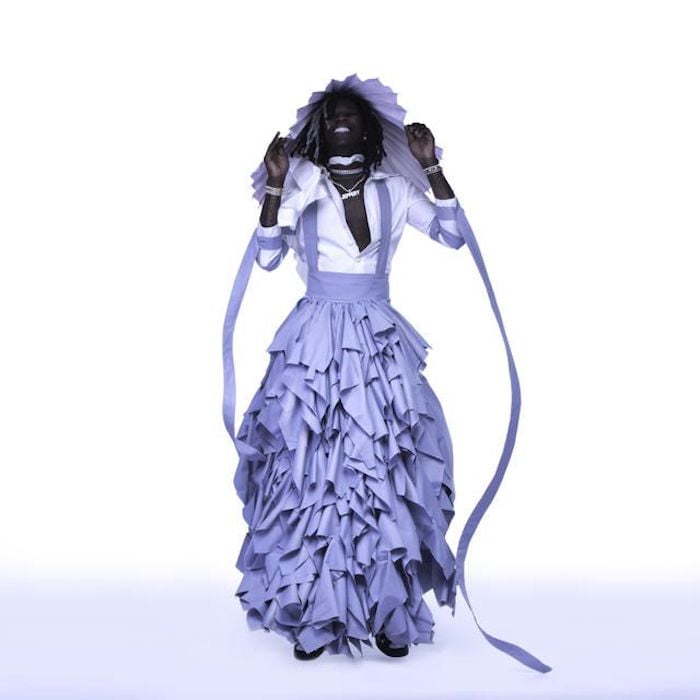
I really liked Nazir’s choice of snapshot for this week as it shows a famous rapper Kid Cudi wearing a floral dress during one of his performances. As someone with a predominantly male fanbase, this is a bold choice as it would inevitably cause people to speculate and ask questions regarding his sexuality. I don’t believe Kid Cudi has ever come out about his sexual orientation but I love that he wore it as a statement to those who base their assumptions about someone’s sexuality or their overall identity solely on what they choose to wear. Perpetuating that a man shouldn’t be “allowed” to wear more “feminine” clothing is absurd and as previously stated, only breeds insecurity on the pretense of not being “man enough”. Everyone should be entitled to dress however they please without the worry of being judged or having assumptions placed on their sexual orientation. Many people use clothing as a form of self expression, especially artists as they consider their bodies to be a part of their “brand” and “art”. Whether you wear the type of clothes simply to keep a low profile or blend in and not draw as much attention to yourself, or you like to wear statement pieces like Cudi does, it should not matter and should not be used as a form to critique or assume others. The more seemingly “masculine” men take this approach for fashion, the more others will follow suit and slowly but sure, we can normalize males dressing more effeminate without fearing any judgement.

Content Response #3

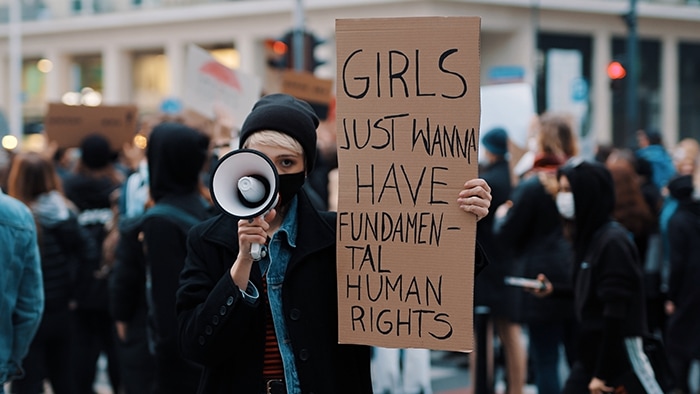
I really like Safiya’s demonstration of white privilege and racial inequities. It’s a shame that black children have to be exposed to violence against their own people so early on. It’s even worse when the parent deems it necessarily for their safety. Young black men and women get brutality murdered by the police for unjust causes at an alarming rate. Meanwhile, at the same age that children of color are taught about the many ways their lives could be endangered, white boys and girls are taught about “the birds and the bees”. That dichotomy is extremely jarring but it can be perfectly explained by Peggy McIntosh’s, “White Privilege: Unpacking the Invisible Knapsack” where they speak about how, “White privilege is like an invisible weightless knapsack of special provisions, maps, passports, codebooks, visas, clothes, tools and blank checks.” It is things like these that let white kids stay innocent and in many ways, oblivious to their privileges up until adulthood and for many, their entire lives. White people inherit these privileges as soon they are born, unlike POC’s who’s skin color poses disadvantages that aren’t deserved. Human rights are about making sure that things are not only equal, but fair as well.