- My understanding of means of production is that ‘means of production are privately owned rather than owned by the labors, and the products are sold in a market for profit. An example of means of production is Youtube, when watching youtube videos that have ads on them the person video that you are viewing is making a profit from that because the more video. Sponsors paid anywhere between $0.035 to $0.15 per view to YouTubers in 2020 for sponsored video content on the platform; another example of means of production is also with the people that have youtube premium and don’t want ads and listen to music without having their screen on they YouTubers get paid a fee from what youtube gets paid per member that has a premium membership that views the YouTubers channel so they are getting paid either way. I understand that labor is essential because it’s the only thing that can increase the value of what you have. An example of labor is farmworkers they grow crops and sell them to larger companies and the value gets increased and the money they get they grow more crops and keep doing the same cycle by supplying the companies with the foods.
- Based on the ideas projected in Video 5.1 about the value that the labor is measured in time, hours, and minutes and the more labor time it takes to make something under normal conditions, the more valuable it is. An example of value is my boyfriend, he does graphic designing and the more time he spends on that graphic design the better the quality so the value increases of that design. The value increased because he started with a blank screen and his ideas and vision made something that is valuable and it’s the time he spent on making it.
- Labor and value are related because, In the labor theory of value, the amount of labor that goes into producing an economic good is the source of that good’s value. If labor is the source of value then why aren’t the most valuable things made in the most labor-intensive industries? The connection between labor and value is that labor power, the ability of labor in marxism is that labor is the most important commodity in the world and when a commodity is applied to value it increases the value of what you have. Labor power is something you use to get money in exchange for the labor you put into your job. An example of labor power are you going to school and the teachers squeezing in a 45-minute lesson for you to get all the information you need to learn for that day to complete your homework.
- The difference between labor and labor power is that labor power as I stated in the previous question is something you use to get money in exchange for your labor for that day of work, is an ability to do labor whereas labor is the work you are doing for the owning class. When you use labor power you are working and it takes a certain amount of food and clothing supply to make you accomplish your labor goal whereas with labor you are just doing the job. Labor power is what a worker sells to an employer. The employer “consumes” the purchased labor power by setting its owner the worker to perform the laboring activity (to do labor) alongside/with tools, equipment, and raw materials. Labor is something humans have always done to produce the goods and services upon which life depends.
- Surplus value is the value on top of the value it took you to get there. The surplus value goes to the company you work for not to you but your bosses. Surplus value is important to us because that’s how capitalism works, they hire you in jobs to increase the value of what you have and then they keep the extra value for themselves. Marx thought that capitalism has a lot to do with surplus value because it’s sustained on the fact of exploiting the working class. An example of surplus value is how people are working at an office and you are done from your 9 – 5 pm shift and you finish at let’s say 1 pm you still have to use labor power and your boss is getting surplus value off of you which means the work you are doing those extra hours your bosses profit from them not you since they are still going to pay you the same wage for the labor you exchanged with them from 9 – 1 pm.
Discussion Board 4.2
- The difference between owners and employees is that owners live off of the work done by employees. Parenti stated in Reading 4.3, “That an owner is considered the ‘owning class‘ that live off investments, that includes stocks, bonds, rents, mineral royalties, and other property income”. This example shows that the ‘owning class’ is considered the wealthy class and is anything that is considered valuable in America material-wise; like owning those expensive condos in Hudson parkway in NYC Downtown you are considered wealthy because that’s a very big investment especially since it’s a private gated community in Nyc Downtown. An example of an employee is people forced to find jobs because they need money to provide them stability since they lack wealth status. They live off of wages, salaries, and fees. Everyone needs money because everything we need needs to be bought with money. If you are working and earning at least $40,000 you aren’t wealthy, you are considered an employee, and employees depend on money to help hey have stability, whereas if you are an owner just because you own 5 stores and 3 don’t pay their rent on them you still will have food to put on your table because the other 2 stores paid their rent on time.
- I understood the quote by Adam Smith that stated, “labor is alone the ultimate and real standard by which the value of all commodities can at all times and places be estimated and compared. It is their real price; money is their nominal price only.” My understanding of this quote is that what is saying about labor is that human labor is like the act of working for example if you are selling gelatin to a customer. Human labor is important. After all, it works for us to use it because it goes into what we need or what we find useful that is made by other people. Another example of human labor is when we don’t feel like making food at home so you order take out and you get it on uber eats that’s double the human labor because someone’s already making the food and packing it for you and someone is bringing it to you also. We depend on so many commodities such as health care, electricity, phones, the internet, etc. If people didn’t work it wouldn’t be beneficial to our daily lives, because like I said we depend on people when we want fast food, go to the hospital, etc. Things are valued more when more human labor was put into them and it makes our survival possible as a society.
- My thoughts on the main arguments of reading 4.4 are that class is NOT an identity because I believe that class is different from identity. I think this is because of the dependency you have because of your social class position which is much more potent than your gender identity.
- I understood that in reading 4.4, “classes are built around a close form of dependency” by being a capitalist. To be a capitalist is to engage in the ongoing exploitation of taking advantage of a particular worker to maintain her wealth status. You don’t become wealthy by saving up, no you become wealthy by owning building properties, and having low-class working people (non-wealthy) help build your status because you become rich off of the work of others.
Discussion Board 4.1
- I did notice similarities in the way social classes are discussed in readings 4.1 and 4.2 they both utilize incomes to in a way to separate the lower, middle, and upper classes based on an estimated annual payment. The difference that I did notice in the way the two readings 4.1 and 4.2 differentiate social types is that 4.1 determines the social types and their differences. Reading 4.2 shows us how the subway lines are demonstrating an estimated total which is about 40% of that subway line stop general area income.
- With an annual income of $23,024, I would say the social class that tends to live in my neighborhood are lower and working class. I’m not surprised by the answer at all because there are some private houses in the area and mostly building that have rent-controlled assistance and housing that helps the community. I feel as if it’s kind of a so and so I don’t disagree and I also agree because it probably increased or decreased in some areas around where I live. Where I live my income isn’t so high but at least we are stable and could eat and sleep and have a roof over our heads. I don’t think that’s true for me but I can’t say for my neighborhood.
- I noticed that on my subway line the stop that has mostly middle and upper class with an income of $135,573 is Brooklyn Bridge – City Hall stop. It’s a huge difference from where I live, let’s say from Manhatten to the Bronx the income is lowered than in Manhatten. You could see kind of an accurate general pattern between social classes in NYC. But I don’t think your income should justify your social class because of an income number because a lower middle-class person can buy some expensive things they just have to work harder to be able to reach that goal, whereas the upper class can buy it and work hard also, well yeah everyone has to work in general to be able to reach their goals.
Discussion Board 3.2
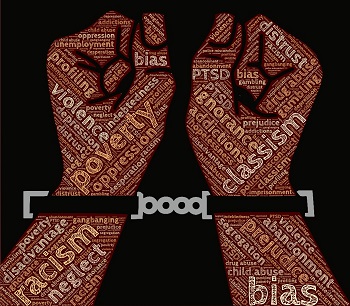
1.) Repressive state apparatuses are institutions such as the police or army that force people into physical coercion. Althusser called it repressive because that can enforce behavior directly, such as the police and the criminal justice system. An example is through these ‘apparatuses’ the state has the power to force you physically to behave.
2.)Schools are ideological state apparatuses because they are mandatory, you are taught how to obey and when not to speak foul language and be respectful of everyone’s things and space, and if you refuse to obey you are removed from the class as a form of punishment. They work because students don’t want to get in trouble so they try to do their best to be on their best behavior.
3.)Repressive state apparatuses are based on securing by force (physical or otherwise) the political conditions of the reproduction of relations of production which are in the last resort relations of exploitation. Ideological State Apparatuses are secured, usually in contradictory forms, by the ruling ideology, the ideology of the ruling class. The difference between repressive and ideological state apparatuses is that ideological state apparatuses are based on reproduction, legitimation, and how to control people’s ideas, beliefs, and values. Reproduction is based on how it reproduces class inequality, failing each generation of working-class pupils in turn, and ensuring that they end up in the same kinds of jobs as their parents. the legitimation is based on legitimating class inequality, producing ideologies that disguise its true cause, trying to convince people that inequalities are inevitable, and how failure is the fault of the individual. The repressive state apparatuses difference is when necessary to protect the capitalist interest, the state uses force to repress the working class via the police, courts & army.

Discussion Board 3.1
1a.) Ideology is based on our beliefs about ourselves and the society that we live in. In the word, Ideology, the word, “idea” basically means a person’s belief or opinions. Ideology focuses on our perspectives on how we view a concept or on our mental impressions. 1b.) An example of Ideology is Disney films. They give you this idea that once you fall in love is a happily ever after or that you have to depend on a man. My belief on that is the complete opposite I believe that we women should be independent and gt our own money; I’m not saying we can’t be in a relationship but it’s about being 50/50, not 100/50. I mean sometimes under the circumstances some people have to choose that path but there is nothing wrong with that I’m just saying what my beliefs are. 1c.) My understanding of ideology is how our beliefs shape the way we think. Ideologies include religions and religious denominations. Everyone has a different belief in a religious matter. Some holy scriptures people may believe in are the Torah, the Holy Bible, etc. Ideology can often be taken for granted and seen as “commonsense”. Political Ideology is talking about whether you identify as a Liberal, Conservative, Libertarian, Socialist, Anarchist, Nihilist, etc.
2.) My understanding of Conservative and liberal ideology is that liberals use facts in decisions making whereas conservatives make decisions based on emotion. Conservatives use corporatism they think lying is okay as long as they get profit whereas liberals believe that is true capitalism they believe in fair playing fields and honest business practices. Liberals are very different in their political views on how they view ideologies because they believe the government should play a big and active role in society. Conservatives’ political beliefs are different because they believe that a large government threatens individual liberty.
3.) Althusser’s definition of ideology is that ideology is a practice instead of a belief. For example, he believes that schools not only teach us the subjects we need to use further in our career and life but they also teach us the principles of how to obey.
Discussion Board 2.2
- I think Southern racist politicians chose to frame their defense of racial segregation through the language of “law and order”, by how they think of civil rights activists and how they think of them as criminals, but in the Bill of Rights, “We have the rights to peacefully protest without causing a commotion”. During the 1950s and 60s America experienced the worldwide freedom movement which is known as the civil rights movement against segregation, where people of our ages, college students, and people of color activists joined forces to make segregation end for all of us and we could be united. Racists believe that races of people are unequal to each other and they can’t coexist. The racist policemen couldn’t arrest people of color because of their race since they don’t have probable cause to arrest them.
- The Southern strategy was based on was a Republican presidential campaign from the 1968 presidential election. From the Nixion speech, “He promised that he would come up with another way to get racist politics to continue”, which I think is just awful I don’t imagine the world in segregation because we go to public schools and share it with different ethnicities. I believe that the Southern strategy is still being used because look at when COVID happened everyone started being very disrespectful towards the Asian Americans because it was said that, COVID started in China. Yes, it originated in China but that doesn’t give people the right to physically harm them because that is happening we need to protect ourselves because hurting them won’t help.
Discussion Board 2.1
- I agree with M. Alexandar’s claims. She claims that so many people are sent to jail in the U.S today is deeply wrong. Michelle Alexandar stated in, The New Jim Crow: Mass Incarceration in the Age of Colorblindness, “While it is true that the publicity surrounding crack cocaine led to a dramatic increase in funding for the drug war (as well as to sentencing policies that greatly exacerbated racial disparities in incarceration rates), there is no truth to the notion that the War on Drugs was launched in response to crack cocaine.” What she shows in this example is how America’s mass incarceration can’t be explained accurately but it isn’t true that most people go to jail because of crime that is being committed. Another reason why she is correct is that she didn’t agree with how people got arrested for “drug charges” which technically isn’t a crime because it doesn’t inhibit criminal behavior. Due to the mainstream media circulating the crack cocaine racist images and people of color getting named called because the people of color were the targets during the time the drugs were being disturbed in their neighborhoods. The “War on Drugs” was a very talked-about topic during the 1980s, since their main focus was to get the people of color involved as much, even the CIA was responsible for putting crack cocaine out on the streets and later getting distributed by other sellers to get the people of color in the poor community incarcerated.
- Michelle Alexandar stated how the racial disparities in the rates of incarceration, “Can’t be explained by the rates of drug crimes because “These stark racial disparities cannot be explained by rates of drug crime. Studies show that people of all colors use and sell illegal drugs at remarkably similar rates.10 If there are significant differences in the surveys to be found, they frequently suggest that whites, particularly white youth, are more likely to engage in drug crime than people of color. That is not what one would guess, however, when entering our nation’s prisons and jails, which are overflowing with black and brown drug offenders. In some states, black men have been admitted to prison on drug charges at rates twenty to fifty times greater than those of white men. And in major cities wracked by the drug war, as many as 80 percent of young African American men now have criminal records and are thus subject to legalized discrimination for the rest of their lives. These young men are part of a growing undercast, permanently locked up and locked out of mainstream society.” This example shows how not only the people of color are guilty of drug crimes but the entire race of humans including, ” Whites, Blacks, Latin, and Asian Americans.” Anyone worldwide can be a potential drug user, drug addict, or possibly a drug dealer. Their main targets are also the minorities and people of color in the criminal justice system just because of their skin color and are more prone to getting incarcerated because the criminal justice system is racist and it can’t be that way because drugs don’t discriminate based on a race because they can be used by anyone.
- The phrase, “The American penal system has emerged as a system of social control unparalleled in world history” is based on how prisons aren’t places where we have any control, the criminal justice sends people to prison who break the law or hurt others physically or killed. Michelle Alexandar made a point on how a prison is a place where society is controlled by criminal justice and where people get unequal treatment based on different ethnicities.