Repressive state apparatus is a system built to control and keep people in line and they do this by showing violence and giving fear .Repressive state apparatus retrains freedom by physically showing people what would happen if they don’t follow the rules.This organization consist of police,prison systems ,and the army all working together to keep control among people.
Ideological state apparatus is a much softer form of authority control that starts from early age at schools. The Schools create obedient workers that follow rules and stay in line preparing them for adult lives.This softer system are at institutions like churches,family structures,and even in the media .Ideological state apparatus is more mental than physical control by giving you invisible options like voting for democrats or republicans or for much simple things like consumerism.
Repressive and ideological state apparatus are two distinct mechanisms of control that consist of The same goal which is keeping you in line .The organization starts with ideological state apparatus by enforcing a form of “that’s not allowed” among people and discreetly controlling what they can and can’t do. When the ideological state apparatus doesn’t work, that’s when repressive state apparatus come into play by enforcing fear and showing what are the consequences of doing the “wrong “ things .
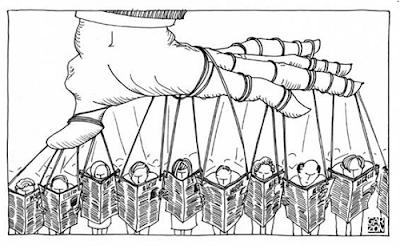
I chose this picture because we can see a upper authority controlling the people below without them noticing



Hello Anivel, your response highlights the similarities between the Repressive and Ideological State Apparatuses and their common objective of preserving control. While Ideological State Apparatuses gently influence behavior through social institutions like families, schools, and the media, Repressive State Apparatuses rely on overt violence and fear. Your observation that Ideological State Apparatuses mold people into submissive employees from an early age emphasizes how control is established through psychological training as opposed to physical force. This argument is strengthened by the image selection, which highlights the covert yet potent influence of authority over people who might not even be aware that they are under its control.